
HERBAL PREPARATIONS · FROM THE JOURNAL
Strong Herbal Infusion vs. Regular Tea: What’s the Difference?
A cup of herbal tea and a strong herbal infusion may begin with the same ingredients, but they aren’t necessarily the same preparation. The amount of herb used, the time spent steeping, and the purpose behind the preparation can make a considerable difference in what ends up in your cup.
Everyday herbal teas are often prepared for their flavour, aroma, and simple enjoyment. Strong herbal infusions take a more deliberate approach, typically using larger quantities of plant material and longer steeping times to extract more of the herb’s water-soluble constituents. Understanding the distinction helps you choose a preparation that suits both the plant you’re working with and what you hope to accomplish.
What Makes an Herbal Infusion Strong?
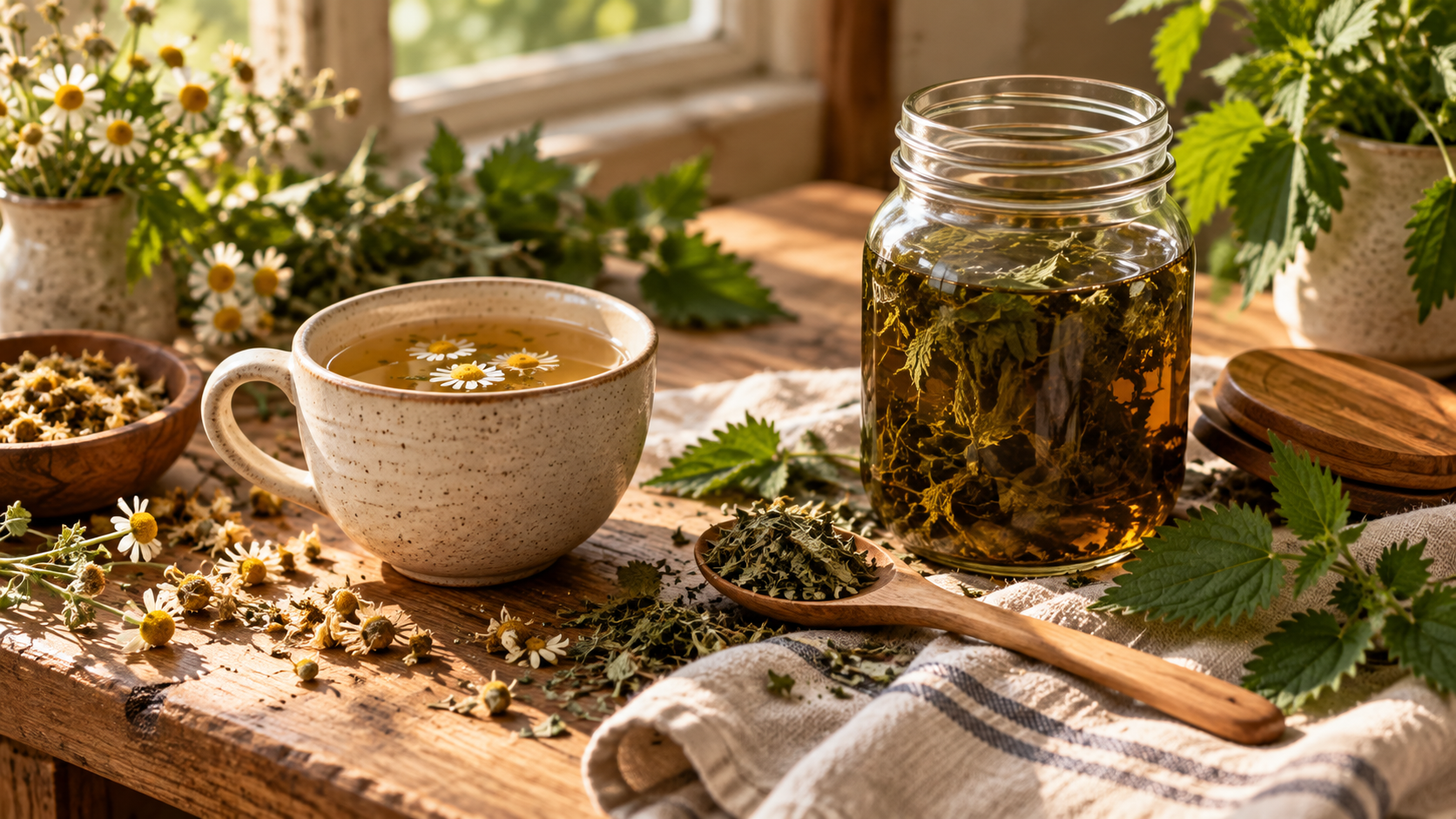
A regular herbal tea is generally prepared with a modest amount of herbs and a relatively short steeping time. A strong herbal infusion uses a larger quantity of plant material, often combined with a much longer steep, to produce a more concentrated preparation.
The difference isn’t simply about making tea taste stronger. The herb, the quantity used, the water temperature, and the length of steeping all influence what ends up in the finished cup.
For example, a nourishing infusion made with nettle leaves is often steeped for several hours, while delicate aromatic herbs may be better suited to shorter preparations that preserve their fragrant qualities. Not every herb benefits from an overnight steep, and stronger isn’t automatically better.
How to Make a Regular Tea or Strong Herbal Infusion
Both preparations begin with herbs and water, but the quantities and steeping times are what set them apart. Here’s how the two approaches typically work.
Everyday Herbal Tea
For a regular cup of herbal tea, use approximately 1–2 teaspoons of dried herbs per 250 ml (1 cup) of hot water. Cover and steep for 5–15 minutes, depending on the herbs you’re using. Strain and enjoy.
This method is especially useful for aromatic herbs such as chamomile, peppermint, and lemon balm, whose fragrant qualities are often best enjoyed in a freshly brewed cup.
Strong Herbal Infusion
For a traditional long-steeped nourishing infusion, place approximately 25–30 g (1 oz) of dried nettle leaves into a heatproof 1-litre jar. Add 1 litre of freshly boiled water, cover, and allow to steep for approximately 4 hours before straining.
This is one example of a strong infusion, rather than a universal recipe for every herb. Different plants require different quantities and steeping methods.
The important distinction is that a strong herbal infusion is a deliberate preparation, made with a particular plant and purpose in mind—not simply an ordinary tea left steeping indefinitely.
When Should You Choose a Strong Infusion Instead of Tea?
The best preparation depends on the herb you’re working with and what you hope to get from it. A regular herbal tea is often ideal when you want something aromatic, comforting, and easy to prepare throughout the day. A strong infusion is a more intentional preparation, particularly when working with nourishing herbs traditionally used for their mineral-rich leaves.
Nettle is a familiar example of a plant used in long-steeped infusions. Its leaves contain minerals, including calcium, magnesium, and potassium, although the amounts that enter the finished infusion vary with the herb, quantity, and brewing method.
Chamomile, lemon balm, and peppermint, on the other hand, are often enjoyed as shorter-steeped teas. Their aromatic qualities are part of what makes them appealing, and a longer steep isn’t necessarily an improvement.
Rather than treating strong infusions as an upgrade from ordinary tea, think of them as two different ways of working with plants. Learning which method suits each herb is far more useful than automatically making every preparation stronger.
Herbal Tea vs. Strong Infusion: At a Glance
| Consideration | Regular Herbal Tea | Strong Herbal Infusion |
| Herb quantity | Usually 1–2 tsp per cup | Larger, measured amounts |
| Steeping time | Usually 5–15 minutes | Often several hours |
| Common examples | Chamomile, peppermint, lemon balm | Nettle and other suitable nourishing herbs |
| Main purpose | Everyday enjoyment and aromatic qualities | More concentrated extraction from selected herbs |
A good herbal preparation isn’t defined by how strong it is, but by how thoughtfully it’s made. Whether you’re steeping a fragrant cup of chamomile or preparing a longer infusion of nettle, the real skill lies in understanding the plant, choosing an appropriate method, and allowing that knowledge to deepen through practice.
Take Your Herbal Skills Further
THE ROOTED TRAVELER GUIDE COLLECTION
Herbal Tea Collection
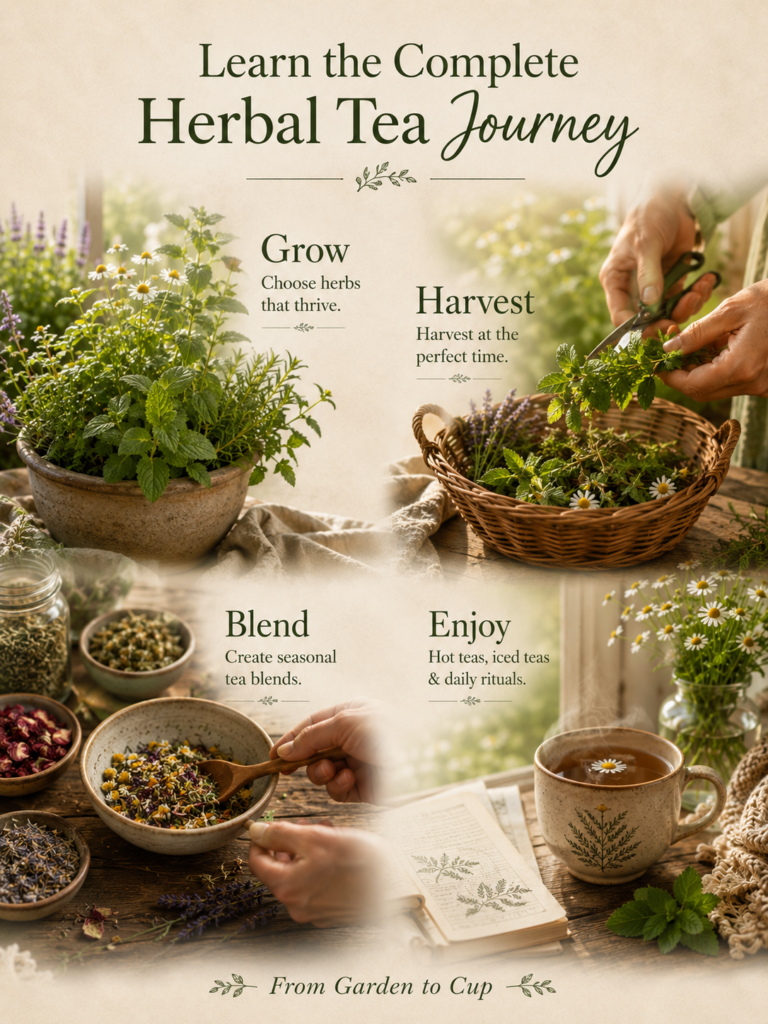
Explore herbal tea-making beyond the basics with our Herbal Tea Collection, bringing together practical guides for creating seasonal blends and developing your own everyday tea rituals.
Digital Guide Collection · Printable PDFs