

THE HERBAL LIBRARY · PREPARATIONS
Decoction
Decoctions are traditional water-based herbal preparations made by gently simmering tougher plant materials, such as roots, bark, and certain seeds. Unlike delicate leaves and flowers that are usually steeped in hot water, these denser ingredients often benefit from sustained heat to release their constituents. Learn how to prepare a herbal decoction, choose suitable plants, and adjust simmering times for different ingredients.
UNDERSTANDING THE METHODS
Two Ways to Prepare a Herbal Decoction
Decoctions use sustained, gentle heat to extract constituents from tougher plant materials. The method you choose depends on the herbs you’re working with and how readily they release their properties into water. Some roots and barks need only a relatively short simmer, while denser materials may benefit from a longer extraction.
THE EVERYDAY METHOD
Standard Decoction
A standard decoction involves gently simmering chopped roots, bark, or other firm plant materials in water for approximately 15–30 minutes. This method works well for many commonly used roots and spices, allowing their water-soluble constituents to be extracted without prolonged cooking.
THE EXTENDED METHOD
Long Decoction
Some particularly dense roots, barks, and woody materials benefit from a longer, gentle simmer of 30–60 minutes or more, depending on the plant. This approach requires monitoring the water level and adding more as needed to prevent the preparation from boiling dry.
THE PRACTICAL METHOD
How to Make a Herbal Decoction
Making a decoction is simple: combine firm herbal ingredients with water, bring them to a gentle simmer, and allow time for extraction. Starting with cool water helps the ingredients heat gradually, while keeping the pot covered limits evaporation and preserves aromatic compounds.
A SIMPLE DECOCTION TO TRY
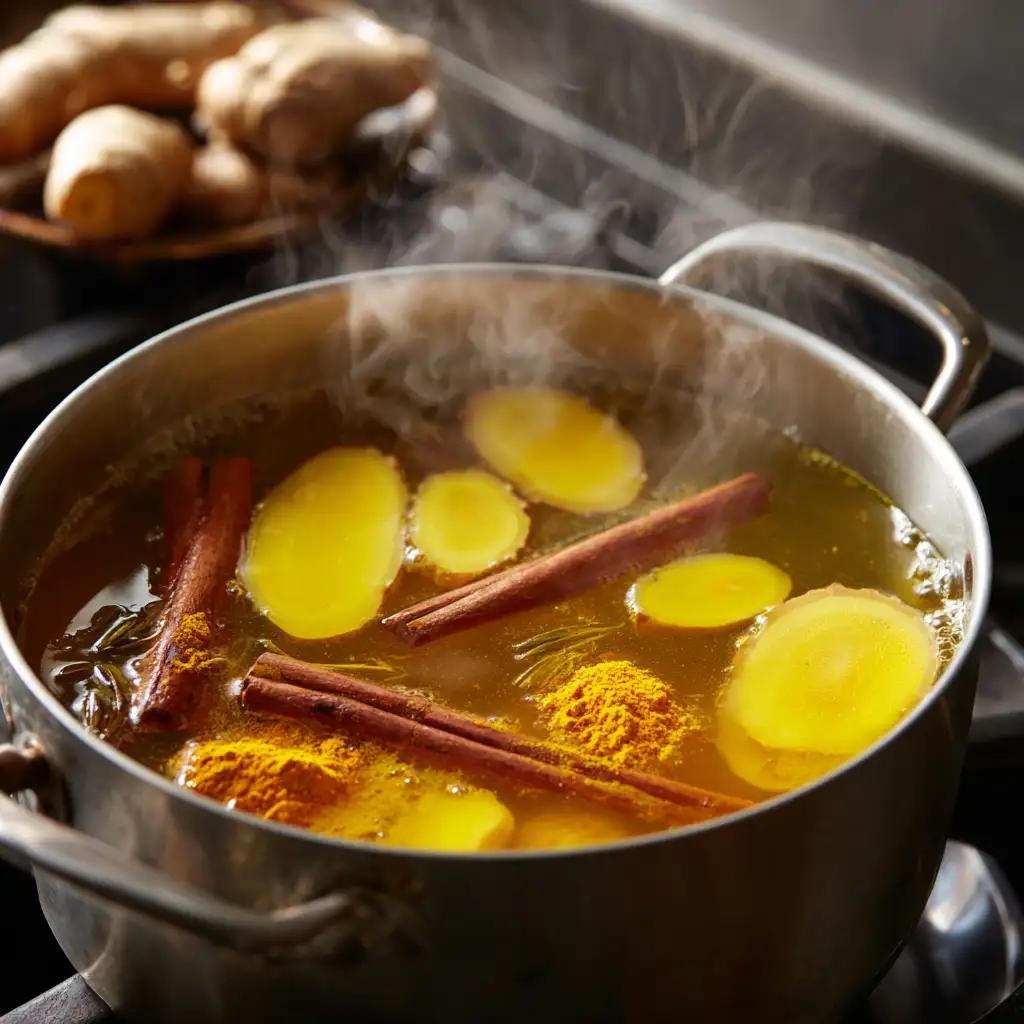
Ginger & Cinnamon Decoction
2 cups (500 ml) water
5–6 thin slices fresh ginger (approximately 10–15 g)
1 small Ceylon cinnamon stick
Preparation
Place the ginger and cinnamon in a small saucepan with the cool water.
Bring just to a simmer over medium heat.
Cover, reduce the heat, and gently simmer for 20 minutes.
Remove from the heat, strain, and pour into a cup.
Enjoy warm, adding a little honey if desired.
Makes: Approximately 1–2 servings, depending on evaporation.
Tip: Keep the saucepan covered during simmering to limit evaporation, and add a little hot water if needed to keep the herbs submerged.
Combining Decoctions with Herbal Infusions
Some herbal blends contain both tough plant materials and delicate leaves or flowers. Rather than simmering everything together, you can prepare the denser ingredients first, then add the delicate herbs after removing the pot from the heat. This allows each plant material to be prepared in a way that suits it.
THE TWO-STAGE METHOD
Decoct First, Infuse Second
Preparation
Place the roots, bark, or other suitable firm ingredients in a saucepan with cool water.
Bring to a gentle simmer, cover, and cook for the time appropriate to those ingredients.
Remove the saucepan from the heat.
Add the delicate leaves or flowers, cover again, and steep for approximately 5–15 minutes, depending on the herbs.
Strain and serve.
Why Use This Method?
A two-stage preparation gives tougher materials enough time to release their water-soluble constituents while protecting the fragrance and volatile oils of more delicate aromatic herbs. For example, ginger root can be simmered first, with lemon balm added after the heat is turned off.
KEEPING YOUR PREPARATIONS FRESH
Storage & Practical Considerations
Decoctions are best enjoyed freshly prepared. Because they contain water and no preservatives, proper handling and storage are important. A few simple habits will help maintain their freshness, flavour, and quality.
Use Clean Equipment
Start with a clean saucepan, strainer, and storage container. Strain out the plant material after simmering, and transfer any decoction you plan to save into a clean, covered glass jar.
Cool & Refrigerate Promptly
Enjoy your decoction warm, or cool leftovers promptly and refrigerate in a covered container. Avoid leaving prepared decoctions sitting at room temperature for extended periods.
Use Within 24 Hours
For homemade decoctions, a practical approach is to refrigerate and use within 24 hours. Reheat gently if desired, and discard any preparation that develops an unusual smell or appearance.
FROM THE HERBAL LIBRARY
Choosing Herbs for Decoctions
Roots, bark, and other dense plant materials often benefit from gentle simmering to release their water-soluble constituents. Exploring the characteristics of individual herbs helps you understand which plants are suited to decoction and how to prepare them.
Ginger
A warming, aromatic rhizome traditionally used for digestive comfort and circulation. Fresh or dried ginger can be gently simmered to create a fragrant, spicy decoction.
Cinnamon
A fragrant bark valued for its warming flavour and traditional digestive uses. Cinnamon sticks can be gently simmered to release their characteristic sweet, spicy aroma.
Dandelion Root
An earthy, slightly bitter root traditionally used to support digestion. Chopped dried dandelion root is commonly simmered to prepare a rich herbal decoction.
Burdock Root
A traditional herbal root with an earthy flavour, commonly prepared as a decoction. Slicing or chopping the root before simmering helps expose more of its surface to water.
CONTINUE EXPLORING
Keep Growing Your Herbal Knowledge
Decoctions open the door to working with roots, bark, and other hardy plant materials. Continue exploring traditional herbal preparation methods, from gentle infusions to tinctures and infused oils, or discover the individual plants and their uses in our Herbs A–Z library.