

THE HERBAL LIBRARY · PREPARATIONS
Herbal Vinegar
Herbal vinegar is a traditional preparation made by steeping aromatic leaves, flowers, roots, or other plant materials in vinegar to extract their flavours and botanical qualities. The natural acidity of vinegar creates a distinctive herbal infusion that can be used in salad dressings, marinades, culinary recipes, and homemade oxymels, offering a practical way to bring herbs into everyday life.
UNDERSTANDING THE METHODS
Two Ways to Prepare Herbal Vinegar
Herbal vinegars can be prepared using dried or fresh plant material. Both methods allow vinegar to draw out herbal flavours and aromas, but the moisture content of the plants affects the finished preparation. Dried herbs offer consistency and convenience, while fresh herbs bring vibrant seasonal flavours and require a little more care.
THE DRIED HERB METHOD
Dried Herb Infused Vinegar
Thoroughly dried leaves, flowers, or aromatic herbs are placed in a clean glass jar and covered with vinegar. Over several weeks, the vinegar gradually takes on their flavour and fragrance. This method offers a convenient way to prepare herbal vinegars throughout the year.
THE FRESH HERB METHOD
Fresh Herb Infused Vinegar
Freshly harvested culinary herbs can be infused directly into vinegar to capture their bright, seasonal character. Because fresh plants introduce additional moisture, use properly prepared herbs and vinegar with at least 5% acidity, and refrigerate homemade preparations rather than assuming they are shelf-stable.
THE PRACTICAL METHOD
How to Make Herbal Infused Vinegar
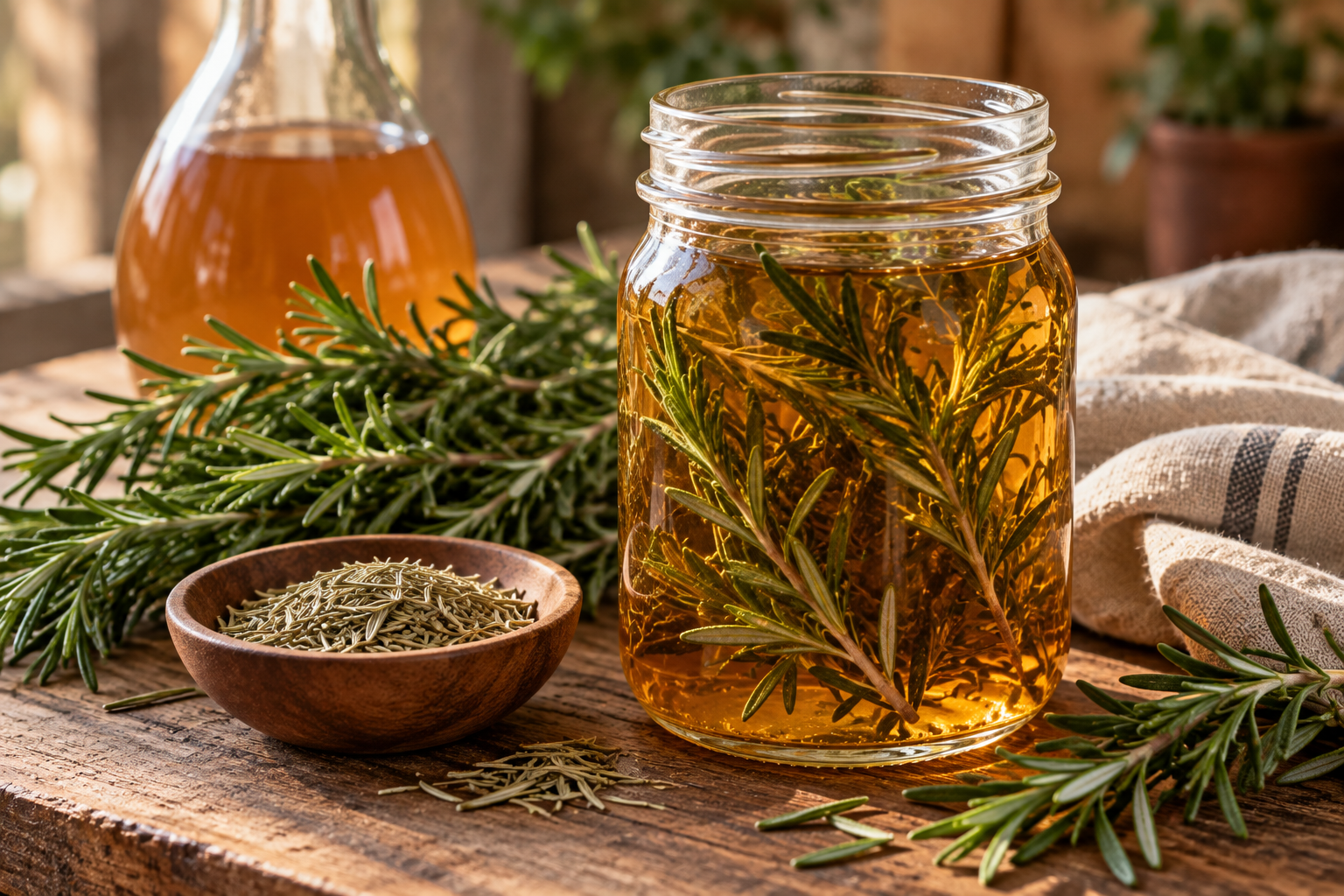
Dried culinary herbs are an excellent starting point for making herbal vinegar at home. Their concentrated aromas gradually infuse into the vinegar, creating a flavourful preparation that can be used in cooking, salad dressings, marinades, and homemade oxymels. Rosemary is particularly well suited to this method, lending a fragrant, savoury character to apple cider vinegar.
A TRADITIONAL HERBAL VINEGAR
Rosemary Infused Vinegar
Ingredients
1 cup (240 ml) apple cider vinegar, 5% acidity
2 tablespoons dried culinary rosemary
1 clean, dry glass jar with a nonreactive lid
Preparation
Place the dried rosemary in the clean glass jar.
Pour the apple cider vinegar over the rosemary, ensuring the herbs are completely submerged.
Seal with a nonreactive lid and refrigerate for approximately 2–3 weeks, gently turning the jar every few days to distribute the herbs.
Once the vinegar has developed a fragrant rosemary flavour, strain through a fine-mesh strainer into a clean glass bottle or jar.
Seal, label with the preparation date, and keep refrigerated.
Makes: Approximately 1 cup (240 ml) of infused vinegar, before straining losses.
Tip: Rosemary vinegar makes a lovely addition to homemade vinaigrettes, roasted vegetables, marinades, and savoury sauces. For a milder flavour, taste the infusion after one week and strain when it reaches your preferred strength.
THE FRESH HERB METHOD
How to Make Vinegar with Fresh Herbs
Fresh culinary herbs bring bright, seasonal flavours to herbal vinegar. This method is particularly lovely during the growing season, when aromatic herbs can be harvested directly from the garden. Using vinegar with 5% acidity and keeping the finished preparation refrigerated provides a practical approach for homemade infusions.
THE GARDEN HARVEST METHOD
Fresh Thyme Infused Vinegar
Ingredients
½ cup (120 ml) apple cider vinegar, 5% acidity
4–5 small sprigs of fresh culinary thyme
1 clean glass jar with a nonreactive lid
Preparation
Select healthy thyme sprigs, removing any damaged or discoloured leaves. Rinse gently if needed and dry thoroughly, allowing all surface moisture to evaporate.
Place the thyme in the clean glass jar and pour the vinegar over it, ensuring the herbs are completely submerged.
Seal with a nonreactive lid and refrigerate for approximately 1–2 weeks. Gently turn the jar every few days to distribute the herbs.
Taste periodically and, once the desired flavour develops, strain through a fine-mesh strainer into a clean glass bottle or jar.
Seal, label with the preparation date, and keep refrigerated.
Makes: Approximately ½ cup (120 ml) of infused vinegar, before straining losses.
Choosing Fresh Herbs for Vinegar
Thyme, rosemary, oregano, sage, and basil all make flavourful herbal vinegars. Experiment with individual herbs or combine complementary varieties to create your own seasonal blends. Use healthy culinary herbs and avoid diluting the vinegar with water.
Tip: Fresh thyme vinegar is especially delicious in homemade salad dressings, marinades, and sauces for roasted vegetables. Start with a small batch to discover how the flavour develops.
STORAGE & PRACTICAL CARE
Storing Herbal Infused Vinegar
Vinegar’s natural acidity makes it a useful medium for preserving herbal flavours, but the quality of a homemade infusion depends on the vinegar used, the condition of the herbs, and proper storage. A few simple practices help keep your preparations fresh and flavourful.
Choose the Right Vinegar
Use commercially prepared vinegar labelled with at least 5% acidity. Avoid diluting it with water, and use clean glass jars with nonreactive lids to prevent corrosion. Apple cider, white wine, and red wine vinegars can each bring a different flavour to herbal infusions.
Strain, Label & Refrigerate
Once the desired flavour develops, strain out the herbs and transfer the vinegar to a clean glass bottle. Label it with the herbs used and preparation date. Refrigerate homemade infusions, particularly those made with fresh herbs, and use clean utensils when serving.
Recognize Signs of Spoilage
Check for mould, unexpected bubbling, unusual odours, or changes in texture. Discard any preparation showing signs of spoilage. Homemade herbal vinegars are best treated as refrigerated culinary infusions rather than assumed to be shelf-stable preserves.
FROM THE HERBAL LIBRARY
Choosing Herbs for Herbal Vinegar
Different herbs bring their own distinctive flavours and aromas to infused vinegar. From refreshing leaves to delicate flowers and warming roots, choosing plants that complement vinegar’s natural acidity opens up a wonderful range of culinary possibilities.
Peppermint
Peppermint leaves bring a bright, refreshing character to herbal vinegar. Their cooling aroma creates an interesting contrast with vinegar’s sharpness, making a distinctive addition to dressings and herbal blends.
Lemon Balm
Lemon balm contributes a delicate citrus fragrance that pairs beautifully with apple cider or white wine vinegar. Its leaves create a light, aromatic infusion suited to fresh salads and seasonal recipes.
Lavender
Culinary lavender flowers lend a distinctive floral aroma to vinegar. Used sparingly, they create a fragrant infusion that can bring an unexpected botanical note to vinaigrettes and marinades.
Ginger
Ginger root adds warmth and a pleasantly spicy character to herbal vinegar. Its bold flavour complements vinegar’s tanginess, making it particularly useful in marinades, dressings, and homemade oxymels.
CONTINUE EXPLORING
Keep Growing Your Herbal Knowledge
Herbal vinegars offer a simple, traditional way to capture the flavours and aromas of plants, transforming everyday culinary ingredients into versatile botanical preparations. Continue exploring the art of herbal preparation, from infused honeys and oxymels to tinctures and herbal oils, or discover more plants and their traditional uses in our Herbs A–Z library.