

THE HERBAL LIBRARY · PREPARATIONS
Oxymel
An oxymel is a traditional herbal preparation that combines honey and vinegar with herbs to create a sweet-and-sour botanical infusion. Used for centuries in herbal traditions, oxymels bring together the extracting qualities of vinegar and the sweetness of honey, offering a versatile preparation that can be enjoyed by the spoonful, diluted in water, or incorporated into everyday recipes.
UNDERSTANDING THE METHODS
Two Ways to Prepare an Herbal Oxymel
Oxymels can be made by infusing herbs directly into a mixture of honey and vinegar, or by preparing an herbal vinegar first and blending it with honey afterward. Both approaches create a sweet-and-sour preparation, but they offer different levels of control over flavour and sweetness.
THE COMBINED INFUSION METHOD
Honey & Vinegar Infused Together
Herbs are placed in a clean glass jar and covered with a mixture of honey and vinegar. As the preparation rests, the herbs gradually release their flavours into the sweet-and-sour liquid. This straightforward method is ideal for making traditional oxymels at home.
THE HERBAL VINEGAR METHOD
Infuse First, Sweeten Later
Herbs are infused in vinegar before being strained out. Honey is then stirred into the finished herbal vinegar to taste. This method allows greater control over the final balance of sweetness and acidity, making it especially useful when experimenting with different herbs.
THE PRACTICAL METHOD
How to Make a Traditional Herbal Oxymel
The combined infusion method is a simple way to begin making oxymels at home. Honey softens the sharpness of vinegar, while the herbs gradually lend their flavours and aromas to the mixture. Dried herbs are particularly convenient for a first preparation because they introduce less moisture and allow the flavours to develop slowly.
A TRADITIONAL HERBAL OXYMEL
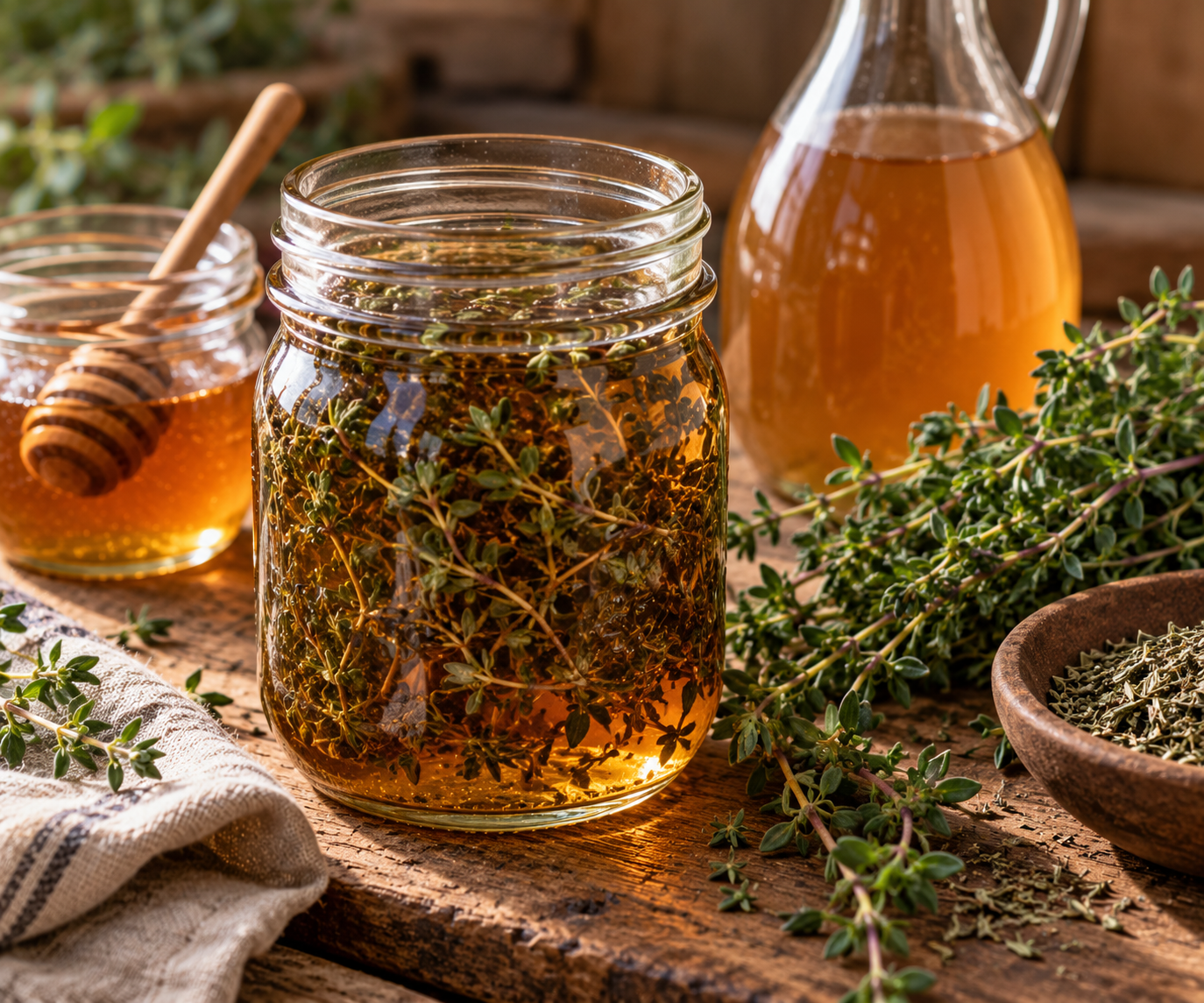
Thyme & Honey Oxymel
Ingredients
½ cup (120 ml) raw apple cider vinegar, 5% acidity
½ cup (approximately 170 g) honey
2 tablespoons dried culinary thyme
1 clean, dry glass jar with a nonreactive lid
Preparation
Place the dried thyme in the clean glass jar.
Pour the apple cider vinegar over the herbs, followed by the honey. Stir thoroughly with a clean utensil until the honey is well incorporated and the thyme is completely submerged.
Seal with a nonreactive lid and place the jar in the refrigerator. Allow the mixture to infuse for approximately 2–3 weeks, gently turning or stirring the jar every few days.
Once the desired flavour develops, strain through a fine-mesh strainer into a clean glass jar. Seal, label with the preparation date, and keep refrigerated.
Makes: Approximately 1 cup (240 ml) of oxymel, before straining losses.
Tip: For a sweeter oxymel, stir in a little additional honey after straining. For a sharper preparation, use slightly less honey in your next batch. The finished oxymel should have a pleasant balance of herbal flavour, sweetness, and acidity.
THE HERBAL VINEGAR METHOD
How to Make an Oxymel by Infusing Vinegar First
This method begins with a traditional herbal vinegar infusion. Once the herbs have been strained out, honey is added to create the finished oxymel. Preparing the two stages separately allows you to adjust the sweetness and acidity to your preference.
THE TWO-STAGE METHOD
Rosemary & Honey Oxymel
Ingredients
½ cup (120 ml) apple cider vinegar, 5% acidity
1 tablespoon dried culinary rosemary
½ cup (approximately 170 g) honey
1 clean, dry glass jar with a nonreactive lid
Preparation
Place the dried rosemary in a clean glass jar and cover completely with the apple cider vinegar.
Seal with a nonreactive lid and refrigerate for approximately 2–3 weeks, gently turning the jar every few days to distribute the herbs.
Strain the infused vinegar through a fine-mesh strainer into a clean glass jar, removing all plant material.
Add the honey gradually, stirring until completely incorporated. Taste and adjust the sweetness to your preference.
Transfer to a clean glass bottle or jar, seal, label with the preparation date, and refrigerate.
Makes: Approximately 1 cup (240 ml) of oxymel, before straining losses.
Adjusting Your Oxymel
The traditional balance of honey and vinegar can be adjusted according to taste. A little extra honey produces a sweeter preparation, while a greater proportion of vinegar creates a sharper, more tangy oxymel. Begin with equal parts and experiment from there.
Tip: Rosemary produces a distinctly aromatic, savoury oxymel. Try a small amount diluted in water or incorporated into homemade salad dressings.
STORAGE & PRACTICAL CARE
Storing Herbal Oxymels
Oxymels combine the acidity of vinegar with the sweetness of honey, but their keeping quality depends on the ingredients, proportions, and preparation method. Careful handling and refrigeration help maintain the quality of homemade herbal oxymels.
Choose the Right Containers
Use clean glass jars or bottles with nonreactive lids. Vinegar can react with exposed metal, so avoid direct contact with ordinary metal lids. Keep utensils clean and label each preparation with its ingredients and date.
Refrigerate After Preparation
Keep homemade oxymels refrigerated during infusion and after straining. Use clean utensils when serving, and avoid introducing water or other ingredients into the finished preparation. Do not assume a homemade oxymel is shelf-stable.
Watch for Changes
Check for mould, unexpected bubbling, unusual odours, or significant changes in appearance. Discard preparations showing signs of spoilage rather than tasting them. Refrigeration and cleanliness are especially important when experimenting with different honey-to-vinegar ratios.
FROM THE HERBAL LIBRARY
Choosing Herbs for Oxymels
The combination of honey and vinegar creates a distinctive base for extracting herbal flavours. From warming roots to fragrant flowers and aromatic leaves, different plants bring their own character to an oxymel. Choosing herbs that complement both sweetness and acidity is part of the pleasure of making these traditional preparations.
Ginger
Ginger root brings a warming, pleasantly spicy character to oxymels. Its bold flavour pairs beautifully with the sweetness of honey and the tang of apple cider vinegar.
Peppermint
Peppermint contributes a refreshing, cooling flavour that balances the sharpness of vinegar. Its aromatic leaves create a lively oxymel that can be diluted into a refreshing herbal drink.
Echinacea
Echinacea has a long history in traditional herbal preparations. Its roots and aerial parts can be used in oxymels, creating a distinctive earthy, slightly bitter infusion.
Lavender
Lavender flowers lend a delicate floral fragrance to oxymels. Used sparingly, dried culinary lavender creates an aromatic preparation with a distinctive sweet-and-tangy character.
CONTINUE EXPLORING
Keep Growing Your Herbal Knowledge
Oxymels bring together the sweetness of honey, the tang of vinegar, and the distinctive qualities of herbs in a preparation rooted in centuries of tradition. Continue exploring the many ways plants can be transformed into everyday herbal preparations, from infused honeys and syrups to tinctures and herbal oils, or discover more plants and their traditional uses in our Herbs A–Z library.