

THE HERBAL LIBRARY · PREPARATIONS
Herbal Glycerite
A herbal glycerite is a liquid botanical preparation made by extracting herbs into vegetable glycerin, often combined with water. Naturally sweet and alcohol-free, glycerites offer an alternative to traditional alcohol-based tinctures. They are particularly useful for preparing gentle-tasting herbal extracts, with the choice of herbs, glycerin concentration, and preparation method influencing the finished result.
UNDERSTANDING THE METHODS
Two Ways to Prepare a Herbal Glycerite
Herbal glycerites can be prepared using dried or fresh plant material. Both methods use vegetable glycerin to extract botanical constituents, but the amount of water naturally present in the herbs affects how the extraction liquid is prepared. Choosing the right glycerin-to-water ratio helps create a consistent, well-balanced preparation.
THE DRIED HERB METHOD
Dried Herb Glycerite
Dried herbs contain very little moisture, so vegetable glycerin is usually diluted with water to help penetrate the plant material and support extraction. This method allows greater control over the liquid proportions and is an excellent starting point for making glycerites at home.
THE FRESH HERB METHOD
Fresh Herb Glycerite
Fresh herbs already contain natural moisture, which contributes water to the finished preparation. A higher proportion of glycerin is therefore generally used to account for this additional moisture. Fresh-herb glycerites capture seasonal plant material but require careful attention to proportions and storage.
THE PRACTICAL METHOD
How to Make a Herbal Glycerite
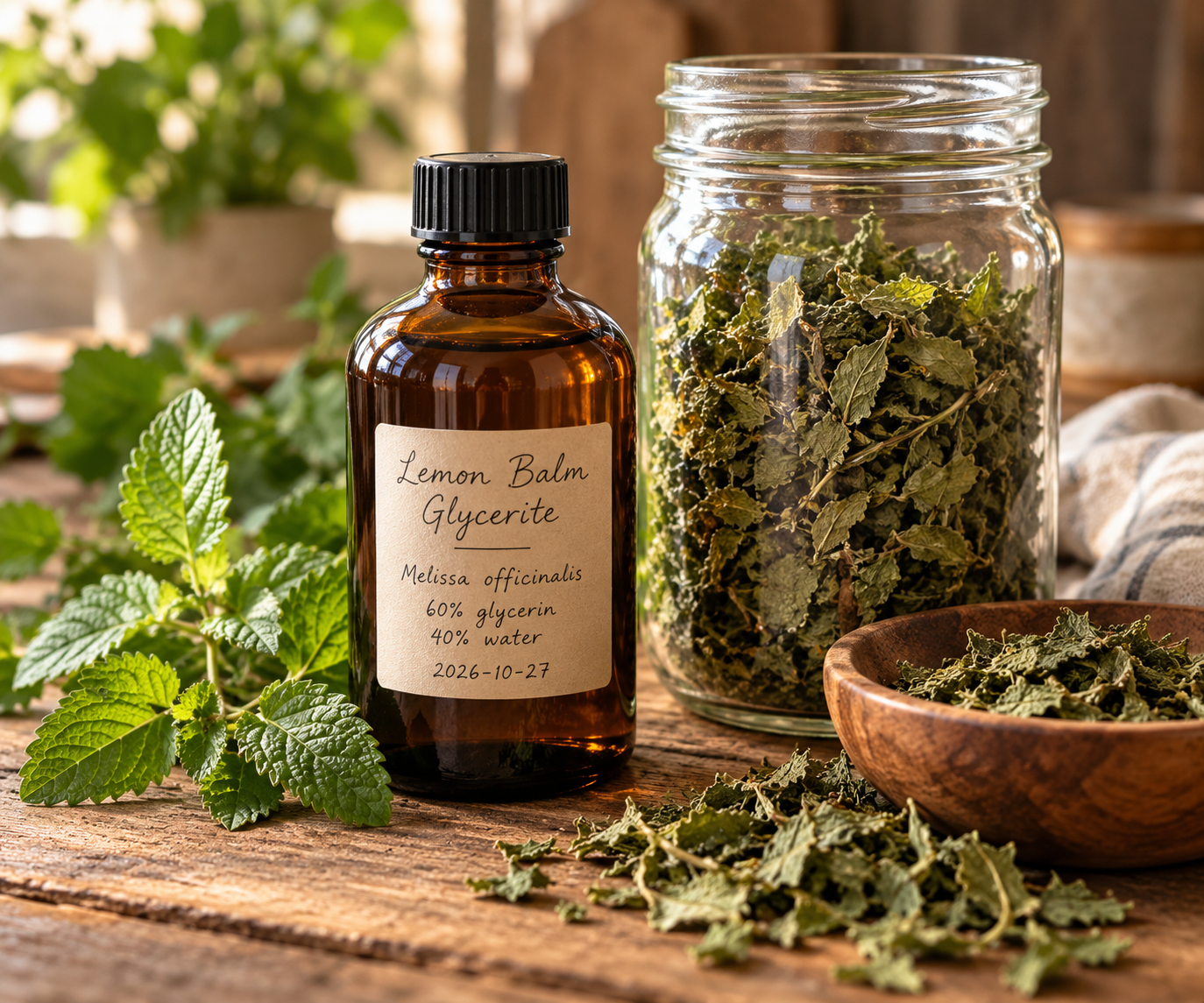
Dried herbs are an excellent starting point for making glycerites at home. Because they contain very little moisture, a measured blend of vegetable glycerin and water helps the extraction liquid penetrate the plant material. Lemon balm is a lovely choice for a first preparation, traditionally valued for its calming qualities and gentle, aromatic character.
A TRADITIONAL HERBAL GLYCERITE
Lemon Balm Glycerite
Ingredients
20 g dried lemon balm leaves (Melissa officinalis)
150 ml food-grade vegetable glycerin
100 ml filtered water
1 clean, dry glass jar with a tight-fitting lid
Preparation
Place the dried lemon balm in a clean glass jar, gently crumbling larger leaves to increase their surface area.
In a separate container, combine the vegetable glycerin and filtered water, stirring until thoroughly blended.
Pour the mixture over the lemon balm, ensuring the herbs are completely submerged. Stir with a clean utensil to release trapped air.
Seal the jar and place it in a cool, dark location for approximately 4–6 weeks. Shake gently every day or two, keeping all plant material beneath the liquid.
Strain through a fine-mesh strainer lined with muslin or cheesecloth, pressing the herbs to recover the liquid.
Transfer the finished glycerite into a clean glass bottle, label with the herb, ingredients, and preparation date, and refrigerate.
Makes: Approximately 150–200 ml of glycerite, depending on how much liquid the dried herbs absorb.
Tip: A 60% glycerin and 40% water mixture is a practical starting point for dried lemon balm. Glycerin extraction differs from alcohol extraction, so the finished preparation will not necessarily contain the same balance of herbal constituents as a tincture. Keep refrigerated and discard if you notice mould, unexpected bubbling, or unusual odours.
THE FRESH HERB METHOD
How to Make a Glycerite with Fresh Herbs
Fresh herbs offer a wonderful opportunity to capture plants directly from the garden. Because freshly harvested leaves naturally contain water, glycerites made with fresh herbs generally require a higher proportion of vegetable glycerin than those made with dried herbs. Careful preparation helps account for this additional moisture.
THE GARDEN HARVEST METHOD
Fresh Peppermint Glycerite
Ingredients
30 g fresh peppermint leaves (Mentha × piperita)
180 ml food-grade vegetable glycerin
20 ml filtered water
1 clean glass jar with a tight-fitting lid
Preparation
Harvest healthy peppermint leaves, removing any damaged or discoloured material. Rinse only if necessary, then dry thoroughly to remove surface moisture.
Finely chop the leaves and place them in a clean glass jar.
Combine the vegetable glycerin and filtered water, stirring until blended.
Pour the mixture over the peppermint, pressing the leaves down to ensure they remain submerged.
Seal the jar and place it in the refrigerator for approximately 3–4 weeks. Gently turn or stir every day or two with a clean utensil.
Strain through muslin or cheesecloth, pressing the leaves to recover the liquid.
Transfer into a clean glass bottle, label with the ingredients and preparation date, and keep refrigerated.
Makes: Approximately 120–170 ml, depending on how much liquid remains in the leaves.
Working with Fresh Herbs
Fresh peppermint contains substantial natural moisture, so the final glycerin concentration will be lower than the 90% used in the initial liquid mixture. The exact concentration cannot be guaranteed without measuring the water content of the harvested leaves. Refrigerate the preparation, make small batches, and do not assume it is shelf-stable.
Tip: Peppermint produces a refreshing, naturally sweet glycerite with a distinctive cooling flavour. Fresh lemon balm is another aromatic option for this method.
STORAGE & PRACTICAL CARE
Storing Herbal Glycerites
Vegetable glycerin helps preserve herbal extracts, but the keeping quality of a homemade glycerite depends on its final glycerin concentration, the moisture content of the herbs, and how the preparation is handled. A few simple practices help maintain the quality of your finished extracts.
Choose the Right Ingredients
Use food-grade vegetable glycerin and clean, good-quality herbs. Measure glycerin and water carefully rather than estimating proportions. Fresh plants contribute additional moisture, which must be considered when preparing the extraction mixture.
Strain, Label & Refrigerate
Once extraction is complete, strain the plant material thoroughly and transfer the glycerite into a clean glass bottle. Label it with the herb, ingredients, and preparation date. Keep homemade glycerites refrigerated, particularly when their final glycerin concentration is uncertain.
Recognize Signs of Spoilage
Check for mould, unexpected bubbling, unusual odours, or significant changes in appearance. Discard any preparation showing signs of spoilage rather than tasting it. A sweet flavour alone does not guarantee that a homemade glycerite is properly preserved.
FROM THE HERBAL LIBRARY
Choosing Herbs for Glycerites
Glycerin has a naturally sweet taste, making it an appealing alternative to alcohol for certain herbal preparations. It works particularly well with fragrant leaves, delicate flowers, and herbs traditionally used in calming or digestive blends. Choosing the right plant helps create a glycerite that is both pleasant to take and suited to its intended purpose.
Peppermint
Peppermint leaves bring a refreshing flavour to glycerites. Traditionally used as a carminative herb, peppermint is especially appreciated for supporting digestion and easing occasional gas and bloating.
Lemon Balm
Lemon balm is a fragrant nervine traditionally valued for supporting relaxation, emotional balance, and digestive comfort. Its gentle lemon aroma pairs beautifully with glycerin’s natural sweetness, creating a pleasant herbal extract.
Chamomile
Chamomile flowers are traditionally used to encourage calm, ease occasional digestive discomfort, and support restful evenings. Their soft, apple-like fragrance makes them a lovely choice for a sweet herbal glycerite.
American Skullcap
American skullcap is a traditional nervine herb valued for its calming qualities, particularly during periods of nervous tension and mental restlessness. A glycerite offers an alcohol-free preparation, although glycerin may extract a different range of constituents than alcohol.
CONTINUE EXPLORING
Keep Growing Your Herbal Knowledge
Herbal glycerites offer a naturally sweet, alcohol-free way to prepare botanical extracts, bringing another valuable method into the home apothecary. Continue exploring traditional herbal preparations, from tinctures and infused honeys to oxymels and herbal syrups, or discover more plants and their uses in our Herbs A–Z library.