
THE HERBAL LIBRARY · PREPARATIONS
Herbal Tincture
Herbal tinctures are concentrated liquid preparations made by extracting plant constituents with alcohol, often combined with water. They offer a practical way to preserve and work with herbs in small quantities. Learn how tinctures are prepared, why alcohol strength matters, and how to choose, strain, and store your own herbal extracts.
UNDERSTANDING EXTRACTION
How Herbal Tinctures Work
A tincture is made by steeping plant material in a carefully chosen mixture of alcohol and water. Each liquid helps dissolve different plant constituents, creating an extract that captures a broader range of compounds than either liquid might extract alone. The balance between alcohol and water depends on the herb, the plant part, and the desired preparation.
THE PRESERVING SOLVENT
Alcohol
Alcohol helps extract constituents such as certain aromatic compounds, resins, and other alcohol-soluble substances. It also contributes to preserving the finished tincture when used at an appropriate concentration.
THE WATER-SOLUBLE SIDE
Water
Water helps extract constituents such as certain polysaccharides, tannins, and minerals. Combining water with alcohol allows the extraction mixture to reach a wider range of plant compounds.
THE BASIC METHOD
How to Make a Herbal Tincture
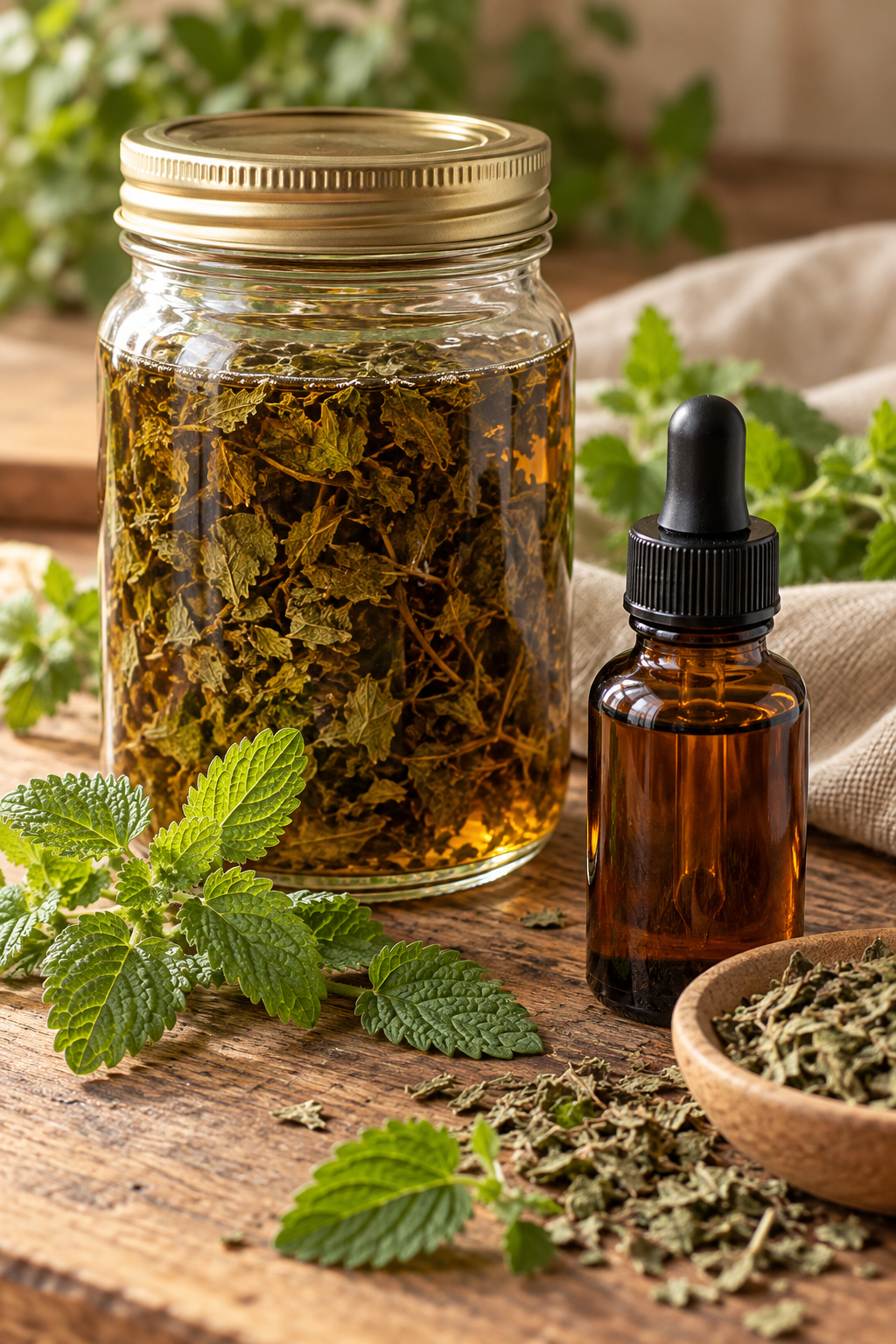
Making a herbal tincture at home begins with choosing the right plant material and extraction liquid. Dried lemon balm offers a practical starting point for learning the traditional maceration method, in which herbs are steeped in diluted alcohol for several weeks before being strained and bottled. This simple example introduces the process while leaving room to explore different herbs and extraction strengths as your knowledge grows.
A SIMPLE HERBAL TINCTURE
Dried Lemon Balm Tincture
Starting ratio: 1:5 (20 g dried lemon balm to 100 mL of 40% alcohol)
20 g thoroughly dried lemon balm leaves (Melissa officinalis)
100 mL unflavoured 40% alcohol (80-proof vodka)
A clean, dry glass jar with a tight-fitting lid
Preparation
Place the dried lemon balm in a clean glass jar and pour the alcohol over the herb, ensuring all plant material is submerged. Stir gently to release trapped air bubbles, then seal the jar.
Store in a cool, dark place for approximately 4–6 weeks, shaking gently every few days. Check periodically that the herbs remain covered by the liquid.
Strain through a fine mesh strainer or cheesecloth, pressing the herbs to recover the liquid. Transfer the finished tincture into a clean amber glass bottle and label with the herb, alcohol strength, ratio, and preparation date.
Tip: This recipe uses a 1:5 herb-to-liquid ratio by weight to volume (20 g dried herb to 100 mL alcohol). Different herbs may require different ratios and alcohol strengths.
UNDERSTANDING YOUR SOLVENT
Choosing the Right Alcohol Strength
Alcohol concentration plays an important role in herbal tincture making. Different strengths extract different combinations of plant constituents, and the moisture content of the herb also affects the final concentration. Dried herbs generally require less alcohol to account for plant moisture than fresh herbs, while resin-rich or particularly aromatic plants may benefit from stronger alcohol. Understanding these differences helps you choose a suitable extraction liquid rather than relying on one strength for every herb.
COMMON EXTRACTION STRENGTHS
40% Alcohol (80 Proof)
A practical starting point for many dried leafy herbs, including lemon balm. This concentration provides both alcohol and water for extracting a range of plant constituents and is readily available as ordinary unflavoured vodka.
50–60% Alcohol (100–120 Proof)
Often used when a higher alcohol concentration is desirable, including for certain aromatic herbs. The appropriate strength depends on the plant and the constituents being extracted. This range can also be useful in some fresh-herb preparations, although plant moisture will dilute the alcohol.
70% Alcohol and Above (140+ Proof)
Higher concentrations are sometimes selected for resin-rich plant materials or particular constituents that dissolve more readily in alcohol. These strengths are not automatically better and may be less suitable for extracting certain water-soluble compounds.
FRESH VS. DRIED HERBS
Fresh herbs contain significant natural moisture, which dilutes the alcohol during extraction. For this reason, fresh-herb tinctures often begin with stronger alcohol than dried-herb preparations. The appropriate concentration and herb-to-liquid ratio should be selected for the specific plant rather than applied universally.
Tip: Alcohol percentages refer to alcohol by volume (ABV). Always use food-grade alcohol intended for consumption when preparing tinctures for internal use. Never use rubbing alcohol or denatured alcohol.
PRESERVING YOUR HERBAL EXTRACTS
Storage & Practical Considerations
Properly prepared alcohol-based tinctures can remain useful for years when stored under suitable conditions. Alcohol helps preserve the extract, while careful straining, clean bottles, and protection from heat and light help maintain its quality. The finished tincture’s stability depends on the alcohol concentration, plant material, and preparation method.
Bottle & Label Carefully
Strain the finished tincture thoroughly and transfer it into clean, dry glass bottles with tightly fitting lids. Label each bottle with the herb’s name, plant part, alcohol strength, extraction ratio, and preparation date.
Protect from Heat & Light
Store tinctures tightly closed in a cool, dark cupboard, away from direct sunlight and temperature fluctuations. Amber glass bottles are useful for protecting extracts from light, while secure lids help limit evaporation.
Monitor Quality Over Time
Shelf life varies with the herb, alcohol concentration, and preparation method. Check stored tinctures periodically for unusual changes, damaged seals, or signs of contamination. Discard any extract that appears spoiled.
EXPLORING HERBAL EXTRACTS
Choosing Herbs for Tinctures
Many medicinal herbs can be prepared as tinctures, offering a convenient way to extract and preserve selected plant constituents. From calming nervines to aromatic digestive herbs, each plant has its own extraction requirements. Understanding which plant parts to use, whether fresh or dried material is preferred, and the appropriate alcohol strength helps you create more purposeful herbal preparations.
Lemon Balm
Lemon balm leaves are traditionally prepared as tinctures for nervous tension, restlessness, and digestive discomfort. Both fresh and dried leaves can be used, with the alcohol strength adjusted to suit the plant material.
Echinacea
Echinacea has a long history in herbal tincture making, particularly for seasonal immune support. Depending on the species and preparation, its roots or aerial parts may be used, with extraction methods chosen accordingly.
American Skullcap
American skullcap is a traditional nervine herb used in tinctures for relaxation and occasional tension. Its flowering aerial parts are commonly extracted in alcohol to create a convenient liquid preparation.
Ginger
Ginger rhizome is commonly prepared as a tincture for traditional digestive support. Its aromatic and pungent constituents make it a useful example of an herb whose extraction benefits from thoughtful alcohol selection.
CONTINUE EXPLORING
Keep Growing Your Herbal Knowledge
Herbal tinctures open the door to a deeper understanding of plant extraction and preservation. Continue exploring different preparation methods, discover the individual qualities of medicinal herbs, and build the knowledge and confidence to create thoughtful herbal preparations at home.