

THE HERBAL LIBRARY · PREPARATIONS
Herbal Compress
An herbal compress is a traditional topical preparation made by soaking a clean cloth in a warm or cool herbal infusion or decoction, then placing it against the skin. Unlike a poultice, which applies the plant material itself, a compress uses the herbal liquid to soothe the skin and provide gentle, localized comfort. Learn how to prepare warm and cold compresses, choose suitable herbs, and incorporate this simple, versatile method into your home apothecary.
UNDERSTANDING THE METHODS
Two Ways to Prepare an Herbal Compress
Herbal compresses can be applied warm or cool, depending on the purpose of the preparation. Both methods begin with a strained herbal infusion or decoction, but the temperature changes how the compress feels against the skin and when it is traditionally used.
THE WARM METHOD
Warm Herbal Compress
A warm compress is made by soaking a clean cloth in a comfortably warm herbal infusion or decoction. Traditionally used to relax tense muscles, ease stiffness, and provide soothing warmth, it is applied gently to the affected area and refreshed as it cools.
THE COOL METHOD
Cold Herbal Compress
A cool compress uses a chilled or room-temperature herbal infusion to provide refreshing comfort. Traditionally used for minor skin irritation, puffiness, and areas that feel hot or tender, it is applied with a soft cloth and refreshed as needed.
THE PRACTICAL METHOD
How to Make a Warm Herbal Compress
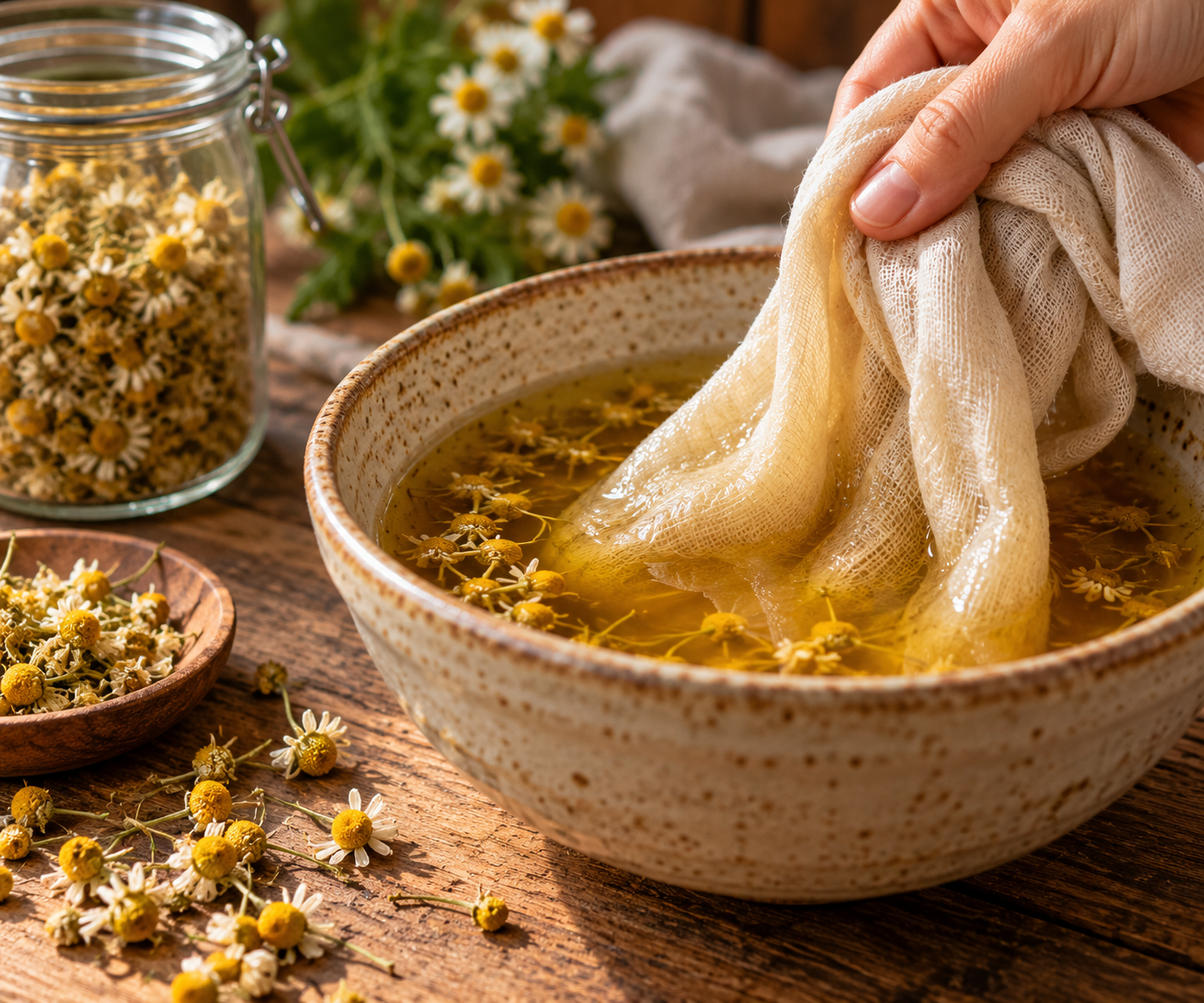
A warm herbal compress combines the comforting warmth of water with a carefully prepared herbal infusion. Chamomile is a traditional choice for soothing skin and encouraging relaxation. This simple method uses a soft cloth soaked in warm chamomile tea, allowing the herbal liquid to rest gently against the skin without applying the flowers themselves.
A SIMPLE WARM COMPRESS
Warm Chamomile Herbal Compress
Ingredients
2 tablespoons dried chamomile flowers
2 cups (500 ml) freshly boiled water
1 clean, soft cotton cloth or washcloth
1 heatproof bowl
Preparation
Place the dried chamomile flowers in a heatproof bowl and pour the hot water over them.
Cover and steep for 10–15 minutes.
Strain thoroughly and allow the infusion to cool until comfortably warm.
Soak the clean cloth in the infusion, then wring out the excess liquid.
Place the warm cloth against clean, intact skin for approximately 10–15 minutes.
Re-soak the cloth as needed to maintain comfortable warmth. Discard the remaining infusion after use.
Makes: One warm compress treatment.
Tip: Always test the temperature against the inside of your wrist before applying the compress. Avoid using chamomile if you have a known allergy to chamomile or related daisy-family plants.
THE COOL METHOD
How to Make a Cool Herbal Compress
A cool herbal compress offers a refreshing way to care for skin that feels warm, irritated, or puffy. Calendula flowers have a long history in traditional skin care, making them a lovely choice for this preparation. The herbal infusion is prepared first, then cooled before being applied with a soft cloth.
THE BASIC METHOD
Cool Calendula Herbal Compress
For one application
2 tablespoons dried calendula flowers
2 cups (500 ml) freshly boiled water
1 clean, soft cotton cloth or washcloth
Preparation
Place the dried calendula flowers in a heatproof bowl and pour the freshly boiled water over them. Cover and steep for approximately 15 minutes, then strain thoroughly.
Allow the infusion to cool, then refrigerate it in a clean, covered container until pleasantly cool. Soak a clean cloth in the cooled infusion and gently wring out the excess liquid.
Apply the damp cloth to clean, intact skin for approximately 10–15 minutes. Re-soak as needed to maintain a comfortable temperature. Discard the remaining infusion after use.
Choosing Herbs for Cool Compresses
Calendula, chamomile, and plantain are traditional choices for soothing topical preparations. Use a well-strained infusion to prevent plant particles from clinging to the cloth. A cool compress should feel refreshing rather than uncomfortably cold, and freshly prepared infusions are best for this method.
PRACTICAL CARE & HANDLING
Using Herbal Compresses Safely
Herbal compresses are best prepared fresh, using clean cloths and properly strained herbal infusions. Whether you’re applying a warm or cool compress, a few simple practices help keep the experience comfortable and hygienic.
Prepare Fresh Each Time
Make only the amount of herbal infusion needed for your compress. Use clean, properly identified herbs and discard the remaining liquid after use rather than saving it for another application.
Keep Cloths & Equipment Clean
Wash your hands and use clean bowls, strainers, and soft cotton cloths. Strain the infusion thoroughly before soaking the cloth. Avoid applying homemade compresses to deep wounds, infected skin, or serious burns.
Choose a Comfortable Temperature
Warm compresses should never feel hot enough to burn, while cool compresses should feel refreshing rather than icy. Apply gently for the recommended time and discontinue use if irritation develops.
FROM THE HERBAL LIBRARY
Choosing Herbs for Herbal Compresses
Different herbs offer different qualities when prepared as warm or cool compresses. Some are traditionally valued for soothing irritated skin, while others are used to bring comfort to tired or tense areas. Choosing the right herb and temperature helps you tailor the preparation to your needs.
Calendula
Calendula flowers have a long history in traditional skin care. Their infusion can be used to prepare a warm or cool compress for minor skin discomfort.
Lavender
Lavender’s aromatic flowers are traditionally used in relaxing herbal preparations. A warm lavender compress can be a comforting addition to a quiet evening routine.
Chamomile
Chamomile flowers are traditionally used in calming, soothing skin preparations. A cooled, well-strained infusion makes a gentle herbal compress for clean, intact skin.
Yarrow
Yarrow has a long history in traditional topical herbal practice. A strained yarrow infusion can be used in a compress for temporary comfort on clean, unbroken skin.
CONTINUE EXPLORING
Keep Growing Your Herbal Knowledge
Herbal compresses offer a simple way to work with plants externally, using warm or cool herbal infusions to bring comfort to the skin and body. Continue exploring other traditional preparations, from poultices and infused oils to herbal salves, or discover the individual plants and their uses in our Herbs A–Z library.