

HERBAL PREPARATIONS · FROM THE JOURNAL
Fresh or Dried? Choosing Herbs for Infused Oils
Making an herbal infused oil begins with a simple decision: should you use fresh herbs or dried ones?
Both have their place in traditional herbal preparations, but they behave differently once submerged in oil. Fresh plants contain natural moisture, while properly dried herbs offer a more dependable starting point for infusions intended to be stored.
Understanding that difference helps you choose your ingredients thoughtfully, protect the quality of your preparations, and make herbal oils with greater confidence.
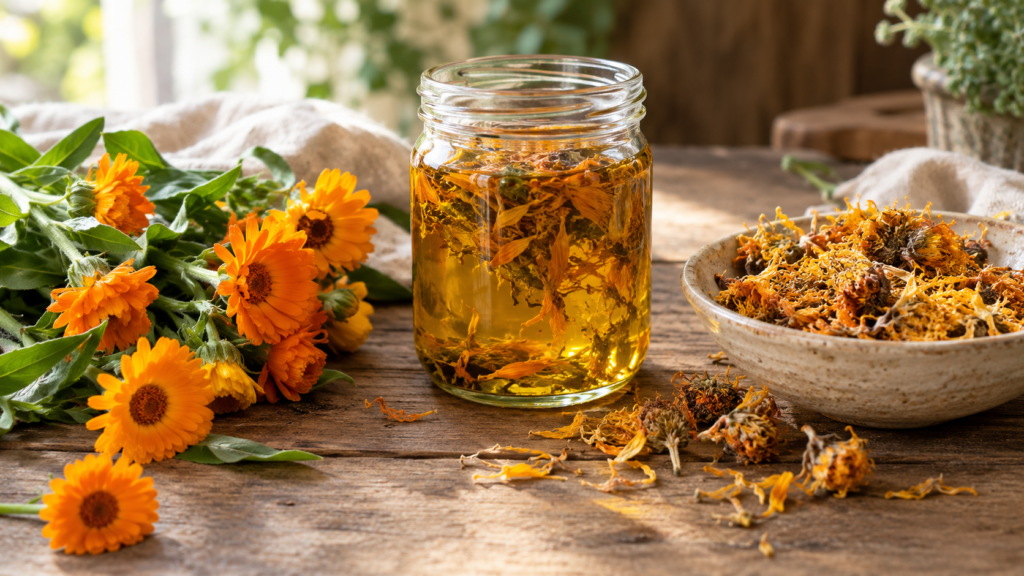
The difference becomes especially important once herbs are submerged in oil. Freshly harvested flowers and leaves contain natural water, and even small amounts of moisture can become trapped around the plant material or settle at the bottom of the jar.
Unlike water-based preparations, herbal oils contain very little available moisture on their own. Introducing water through fresh plants can create conditions for microbial growth, including organisms that may not produce visible signs of spoilage. This is why moisture control is one of the most important considerations when preparing infused oils for storage.
Thoroughly dried herbs offer a more dependable starting point. They allow you to capture the qualities of the plant while reducing the moisture introduced into the oil, although careful preparation and storage are still essential.
Choosing and Preparing Your Herbs
A good herbal oil begins with well-chosen plant material. Whether you’re working with calendula flowers, plantain leaves, or another herb, start with plants that have been correctly identified, harvested from clean surroundings, and handled with care.
For an oil intended to be stored, the herbs should be thoroughly dried before infusion. Flowers should feel papery rather than soft or damp, while leaves should crumble easily between your fingers. Thicker stems and dense flower heads may need additional drying time, even when their outer surfaces appear ready.
Before adding herbs to oil, check for any remaining moisture, discoloration, or signs of mould. Use clean, completely dry equipment, and avoid packing plant material so tightly that it’s difficult to keep everything submerged.
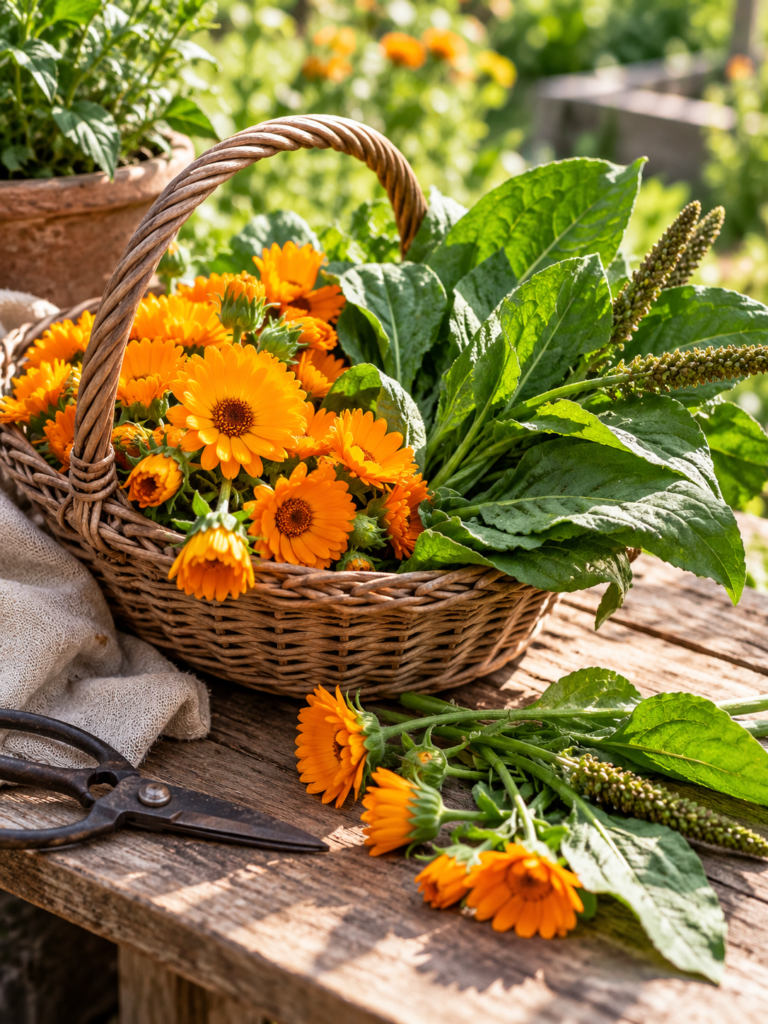
Can You Ever Use Fresh Herbs?
Yes, fresh herbs have a place in traditional oil-making, but they require a different approach.
Because fresh plants contain water, they should not simply be submerged in oil and left at room temperature for weeks.
Fresh-herb preparations require appropriate moisture-control methods, and oils made without a validated preservation process should not be treated as shelf-stable.
Fresh vs. Dried: At a Glance
| Consideration | Fresh herbs | Dried herbs |
| Moisture | Naturally high | Greatly reduced |
| Preparation | Requires special moisture-control precautions | Must be thoroughly dried before use |
| Storage | Not automatically shelf-stable in oil | More suitable for stored infusions when properly handled |
| Best starting point | Methods specifically designed for fresh herbs | Most beginner herbal oil preparations |
Choosing between fresh and dried herbs doesn’t have to be complicated. For most homemade infused oils intended for storage, thoroughly dried herbs offer a practical and dependable starting point. Fresh herbs still have their place in traditional preparations, but understanding their moisture content and using an appropriate method makes all the difference. With thoughtful preparation, you can create herbal oils that honour both the plants and the traditions behind them.
Take Your Herbal Skills Further
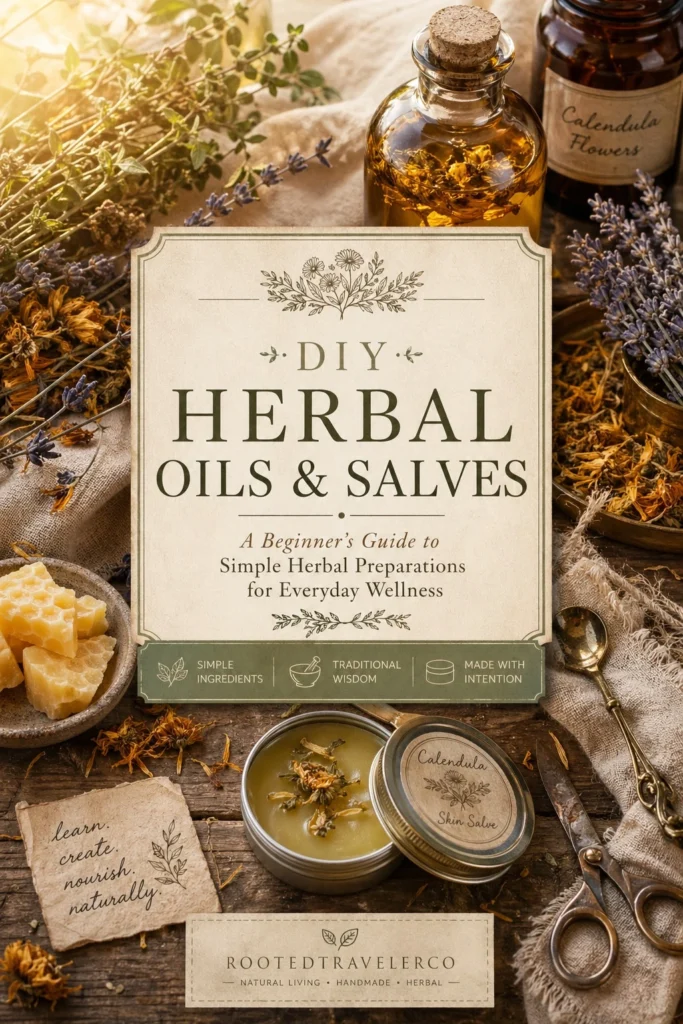
THE ROOTED TRAVELER GUIDE COLLECTION
DIY Herbal Oils & Salves
From choosing and preparing herbs to infusing oils and creating homemade salves, this printable guide walks you through the process with practical, beginner-friendly instructions.
Printable PDF · 16 pages