

THE HERBAL LIBRARY · PREPARATIONS
Infused Oil
Herbal infused oils are a practical way to bring the qualities of plants into everyday skincare and topical preparations. Learn how to choose suitable herbs and carrier oils, prepare a slow or gently heated infusion, and strain and store your finished oil for use in balms, salves, and simple body care.
UNDERSTANDING THE METHODS
Two Ways to Infuse Herbal Oils
Herbal infused oils are made by allowing suitable plant material to steep in a carrier oil, transferring oil-soluble constituents into the finished preparation. Two common approaches are a slow infusion at room temperature and a gently heated infusion when a shorter preparation time is preferred.
THE TRADITIONAL APPROACH
Slow Infusion
Dried herbs are submerged in a carrier oil and left to infuse for several weeks. This low-effort method requires patience but no additional heat.
THE FASTER APPROACH
Gentle Heat Infusion
Dried herbs are infused in carrier oil using controlled, low heat for several hours. This method is useful when you want a finished oil sooner, without overheating delicate plant compounds.
THE TRADITIONAL METHOD
How to Make a Slow Herbal Infused Oil
Slow infusion is a simple, hands-off way to prepare herbal oils at home. By allowing thoroughly dried herbs to rest in a suitable carrier oil for several weeks, you can create a versatile preparation for massage, skincare, and homemade salves.
A SIMPLE HERBAL INFUSED OIL
The Slow Infusion Method
For one small jar
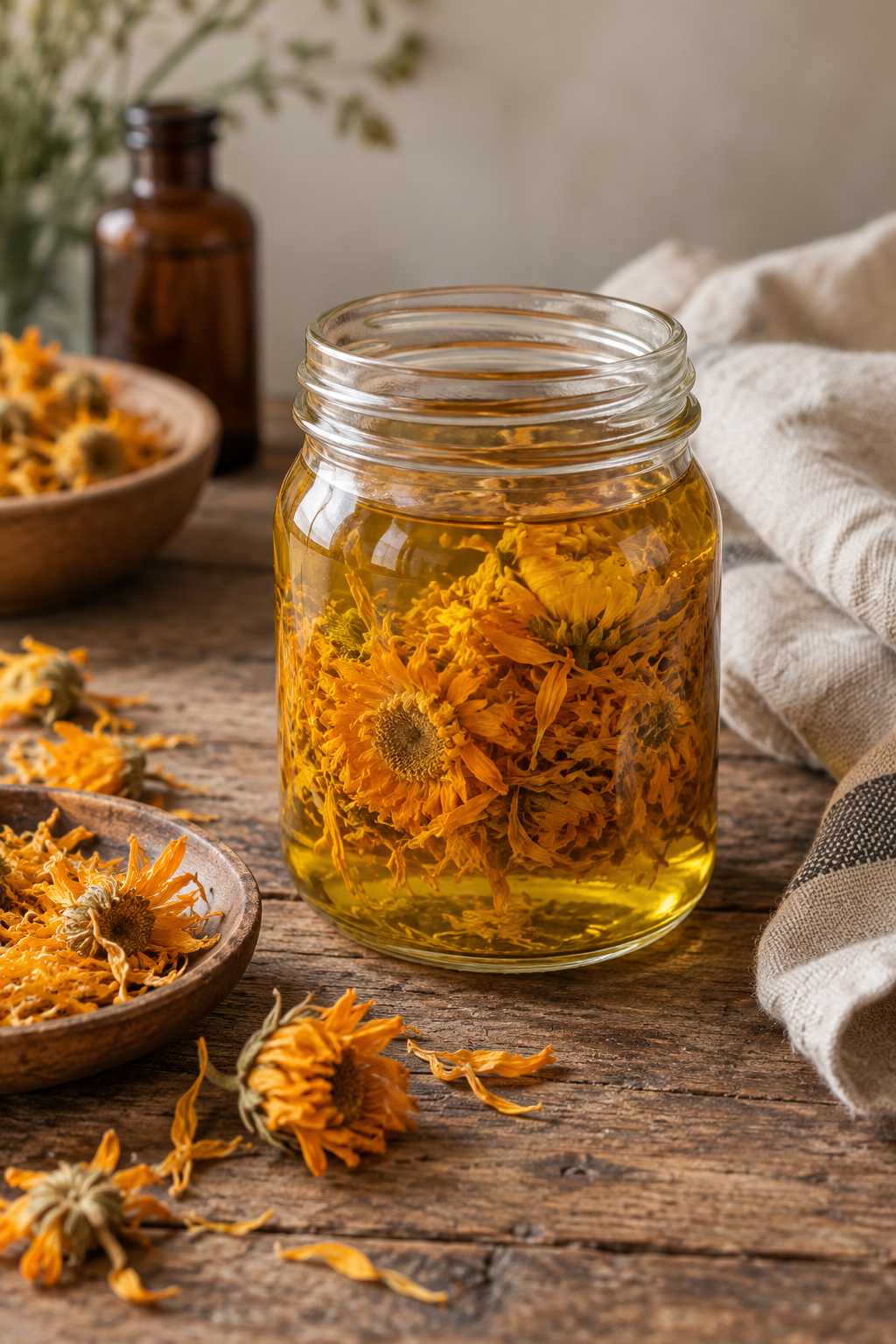
Thoroughly dried calendula flowers
Olive oil or sunflower oil, enough to fully cover the flowers
A clean, completely dry glass jar with a lid
Preparation
Fill the jar loosely about halfway with dried calendula flowers. Pour in the carrier oil until the flowers are completely submerged, leaving a little space at the top. Stir gently to release trapped air bubbles, then seal the jar.
Keep in a cool, dark place for approximately 4–6 weeks, checking periodically that the herbs remain submerged. Strain through clean, dry cheesecloth or a fine strainer, then transfer the finished oil into a clean, dry bottle.
Tip: Label your jar with the herb, carrier oil, and preparation date.
THE FASTER APPROACH
How to Make a Gentle Heat Infusion
A gentle heat infusion offers a quicker alternative to the traditional slow method. By warming thoroughly dried herbs in a carrier oil over low, controlled heat, you can prepare an infused oil in just a few hours rather than several weeks. The goal is to encourage extraction without overheating the oil or damaging delicate plant compounds.
THE BASIC METHOD
A Gentle Heat Calendula Infusion
For one small batch
Thoroughly dried calendula flowers
Olive oil or sunflower oil, enough to cover the flowers completely
A clean, dry heatproof jar and a saucepan or double boiler
Preparation
Place the dried calendula flowers in a clean, dry heatproof jar and cover completely with carrier oil. Set the jar in a saucepan containing a shallow water bath, keeping the water below the jar’s rim. Warm gently over low heat for approximately 2–4 hours, maintaining the oil around 40–50°C (104–122°F). Check the temperature periodically and avoid boiling the oil or allowing water to enter the jar.
Remove from the heat and allow the oil to cool. Strain through clean, dry cheesecloth or a fine strainer, then transfer to a clean, dry bottle.
Choosing Herbs for Gentle Heat Infusions
Gentle heat infusions work well with thoroughly dried calendula, plantain, and certain other suitable herbs. Use low temperatures and monitor the preparation carefully, particularly when working with delicate flowers. Avoid introducing fresh plant moisture into oils intended for storage.
PROTECTING YOUR HERBAL OILS
Storage & Practical Considerations
A well-made herbal infused oil begins with thoroughly dried herbs, clean equipment, and careful handling. Because moisture can encourage spoilage, keeping water out of your preparation is especially important. Proper straining, bottling, and storage help preserve the quality of your finished oil.
Keep Moisture Out
Use thoroughly dried herbs and completely dry equipment. Even small amounts of trapped moisture can encourage microbial growth and spoilage in homemade infused oils.
Store Away from Heat & Light
Strain thoroughly and transfer the finished oil to a clean, dry bottle. Store tightly closed in a cool, dark place to help slow oxidation and preserve its quality.
Watch for Spoilage
Shelf life depends on the carrier oil, preparation, and storage conditions. Label each batch, use it within the carrier oil’s remaining shelf life, and discard oil that smells rancid or shows signs of contamination.
EXPLORING SUITABLE HERBS
Choosing Herbs for Infused Oils
Some herbs are particularly well suited to oil infusions, especially those traditionally used in skincare, massage, and topical preparations. Choosing the right plant, using the appropriate parts, and drying them thoroughly before infusion are important steps in creating a useful, well-preserved herbal oil.
Calendula
A classic choice for infused oils, calendula flowers are traditionally used in soothing skin preparations, balms, and salves.
Lavender
Dried lavender flowers make a beautifully aromatic infused oil, often used in massage blends and simple body-care recipes.
Plantain
Plantain leaves are commonly infused into oils for traditional skin-care preparations, including everyday herbal salves.
Yarrow
Yarrow flowers and leaves have a long history in traditional topical preparations and can be infused into oils for homemade salves.
CONTINUE EXPLORING
Keep Growing Your Herbal Knowledge
Herbal infused oils are just one way to bring plants into everyday life. Explore other herbal preparations, discover the unique qualities of individual herbs, and build your confidence in creating simple, practical remedies at home.