
HERB PROFILE
Lemon Balm
Melissa officinalis
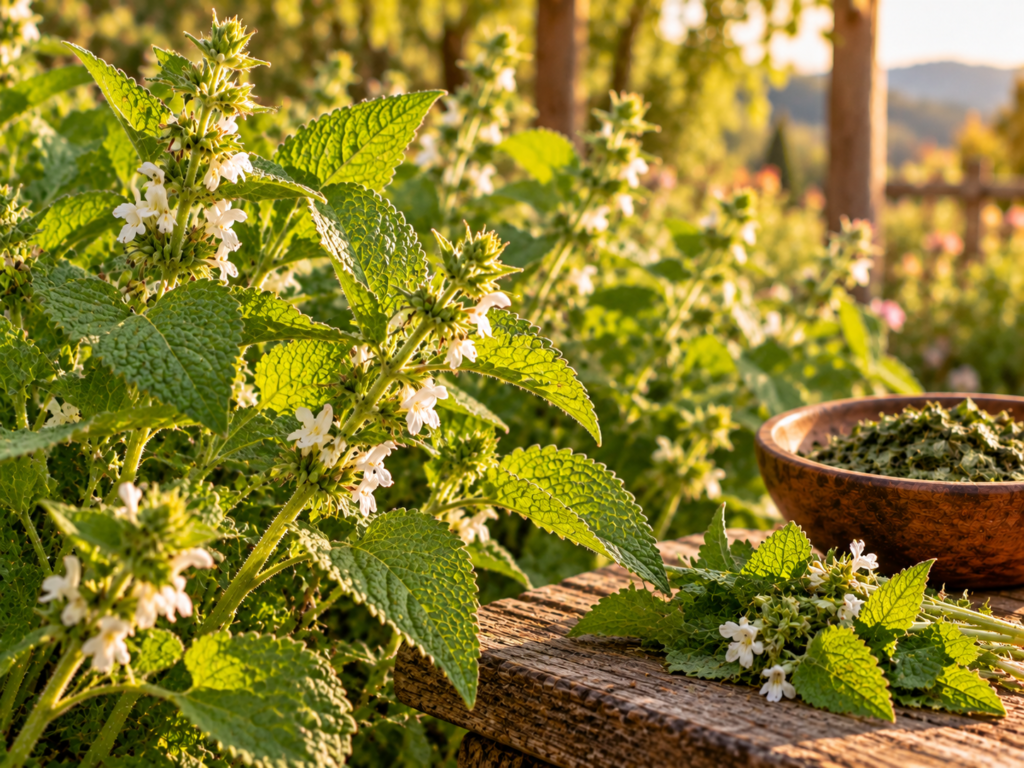
A fragrant perennial in the mint family, lemon balm has a long history of use as both a culinary and medicinal herb. Its aromatic leaves are especially valued in herbal traditions for nervous tension, digestive discomfort, and gentle everyday calming support.
Nervine • Calming • Carminative
Family: Lamiaceae · Parts used: Leaves + flowering tops
At A Glance
Key Actions
Nervine · Calming · Carminative
Best Known For
Nervous tension · Digestive comfort · Gentle relaxation
Common Preparations
Tea · Tincture · Glycerite · Food
Traditional Uses + Modern Context
Lemon balm has been used in European herbal traditions for centuries, particularly for mild nervous tension, restlessness, and digestive discomfort. Its pleasantly aromatic leaves have also been enjoyed as a culinary herb and prepared as a gentle tea, often after meals or during periods of stress.
Modern research has explored lemon balm for anxiety, mood, sleep, cognition, and digestive effects. Some human studies have reported promising results, particularly for stress and mild anxiety, but the evidence remains limited and varies considerably by preparation and dose. Its traditional use is better established than many broader modern claims, making lemon balm best presented as a gentle calming and digestive-support herb rather than as a treatment for anxiety, insomnia, or other medical conditions.
Traditionally Used For
Mild nervous tension + restlessness
Digestive discomfort
Gentle relaxation
Aromatic teas + culinary preparations
Herbal Actions
Lemon balm’s actions reflect its traditional use as a gentle aromatic herb for both the nervous and digestive systems. Its calming qualities pair naturally with its ability to ease digestive discomfort, particularly when stress and digestion overlap.
Nervine
Lemon balm is traditionally used as a gentle nervine to support the nervous system during periods of mild tension, restlessness, or everyday stress.
Calming
Its aromatic leaves are commonly prepared as tea or tincture when gentle relaxation is desired, particularly in the evening or during mentally busy periods.
Carminative
Like many members of the mint family, lemon balm is traditionally used to ease gas, bloating, and mild digestive discomfort, making it especially useful when nervous tension seems to affect digestion.
Explore by Need
Looking for a practical way to use lemon balm? Start with the kind of support you’re looking for, then choose a preparation that fits the moment.
Stress + Nervous Tension
Lemon balm is traditionally used during periods of mild stress, nervous tension, and restlessness. A warm tea or tincture can be a simple addition to a calming routine.
Digestive Comfort
Its aromatic, carminative qualities make lemon balm a traditional choice for gas, bloating, and mild digestive discomfort, particularly when digestion feels unsettled during stressful periods.
Evening Wind-Down
Lemon balm’s gentle calming qualities make it well suited to evening routines when the goal is to relax, settle the mind, and ease into a quieter end to the day.
Preparations
Lemon balm is especially well suited to simple preparations that preserve its fresh, aromatic character. The leaves can be used fresh or dried, although fresh lemon balm often has the brightest flavor and aroma.
Infusion
Fresh or dried lemon balm leaves can be steeped in hot water for a light, aromatic tea. This is one of the simplest ways to use the herb for gentle calming or digestive support.
Tincture
Lemon balm can be extracted in alcohol to create a concentrated, shelf-stable preparation. Tinctures are convenient when a tea isn’t practical or when small amounts are preferred.
Glycerite
A glycerin-based extract offers an alcohol-free option with a naturally sweet taste. It can be especially useful for people who prefer a gentler-tasting liquid preparation.
Food
Fresh lemon balm leaves have a mild lemony flavor and can be added to salads, fruit, infused water, sauces, and other foods. It works particularly well when added near the end of preparation to preserve its fresh aroma.
Growing Lemon Balm
Lemon balm is an easy-to-grow perennial in the mint family that returns year after year in many climates. Once established, it can grow vigorously and spread readily, making it a good candidate for containers or a spot where it has room to expand.
SUN
Light
Lemon balm grows well in full sun to partial shade. In hotter conditions, some afternoon shade can help protect the leaves from intense heat and keep growth lush.
CARE
Soil + Water
Plant in reasonably fertile, well-drained soil and water regularly while young plants establish. Mature lemon balm is fairly adaptable, but consistent moisture encourages tender, leafy growth.
PLANTING
Sowing + Growth
Start lemon balm from seed, cuttings, or divisions in spring. Pinching or cutting the plant back encourages bushier growth, and removing flowers before they set seed can help limit unwanted spreading.
Harvesting and Drying
Lemon balm can be harvested repeatedly throughout the growing season. Its leaves are most aromatic before flowering, although healthy leafy growth can continue to be gathered after the plant has been cut back.
When to Harvest
Harvest on a dry day after morning moisture has evaporated. For the strongest aroma, gather leaves and tender stems before the plant flowers, when its aromatic oils are especially noticeable.
What to Gather
Harvest healthy leaves and the tender upper portions of the stems. Cutting just above a leaf node encourages the plant to branch and produce fresh growth for later harvests.
Drying + Storage
Dry lemon balm promptly in thin layers with good airflow and away from direct sunlight. Once completely dry, store the leaves in an airtight container away from heat, moisture, and light to help preserve their color and delicate aroma.
Safety + Considerations
Lemon balm is generally well tolerated when used as a food or traditional herbal preparation, but concentrated or regular medicinal use deserves additional consideration, particularly with medications and during pregnancy or breastfeeding.
Thyroid Considerations
Laboratory research has raised questions about lemon balm and thyroid activity, but the clinical significance in humans is uncertain. People with thyroid conditions or those taking thyroid medication should discuss regular medicinal use with a qualified healthcare professional.
Sedatives + Medications
Because lemon balm is used for its calming effects, use additional caution when combining concentrated preparations with sedating medications or other substances that cause drowsiness. If you take prescription medications, check for potential interactions before regular medicinal use.
Pregnancy + Breastfeeding
Culinary amounts are different from concentrated herbal preparations. Safety information for medicinal use during pregnancy and breastfeeding is limited, so professional guidance is recommended before using lemon balm regularly in concentrated forms.
This page is educational and is not a substitute for individualized medical advice.
Keep Exploring
Lemon balm pairs naturally with other herbs traditionally used for calming, digestive comfort, and gentle everyday nervous-system support.

Chamomile
A gentle aromatic herb traditionally used for relaxation, digestive comfort, and settling nervous tension.

Peppermint
A cooling aromatic herb traditionally used for digestive discomfort, gas, bloating, and occasional nausea.
Calendula
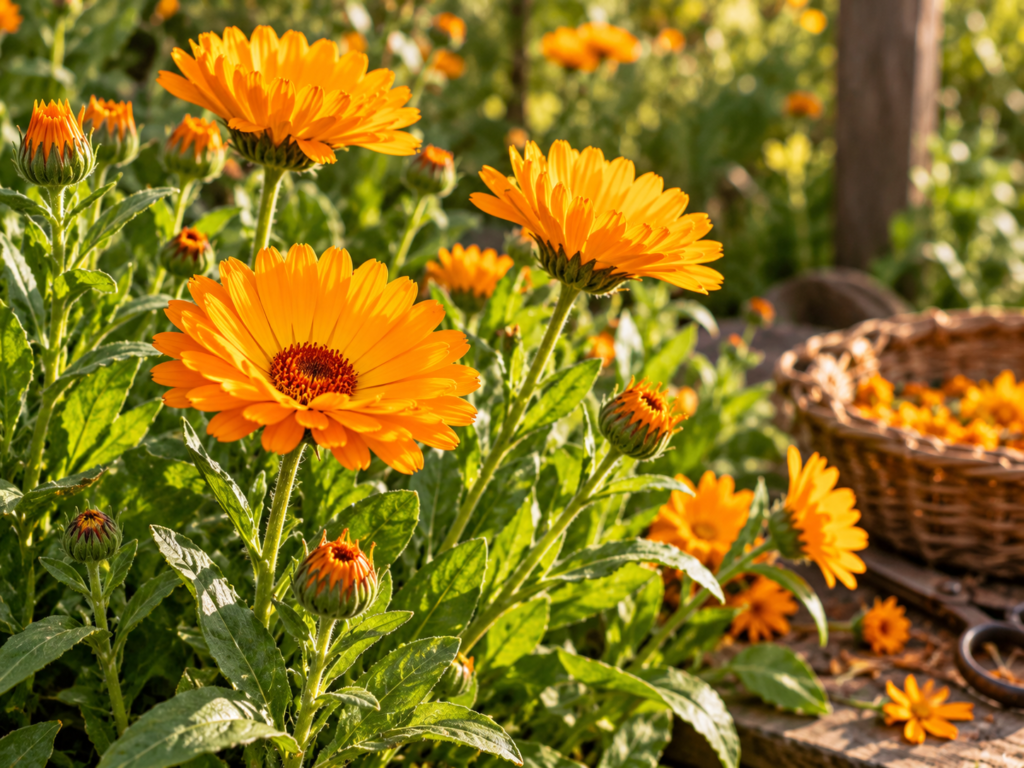
A versatile herbal ally traditionally valued for soothing topical preparations, skin support, and gentle everyday herbal care.
Related Rooted Traveler Co. Guides
Want to go deeper? These Rooted Traveler Co. guides build on lemon balm’s traditional place in calming routines, digestive support, and everyday herbal wellness.
Herbal Stress & Anxiety Guide
Explore calming herbs, simple preparations, and practical ways to build herbal support into periods of everyday stress and nervous tension.
Herbal Sleep & Nervous System Calm Guide
Explore herbs and gentle evening practices traditionally used to support relaxation, winding down, and a calmer nighttime routine.
Digestion: Gas & Bloating Herbal Support
Explore herbs and practical preparations traditionally used for gas, bloating, digestive tension, and everyday digestive comfort.
Sources + Further Reading
Want to dig deeper? These sources offer additional information on lemon balm’s traditional uses, modern research, safety, and herbal-medicine context.
European Medicines Agency (EMA)
Melissae folium – Melissa Leaf
European Medicines Agency, Committee on Herbal Medicinal Products (HMPC).
The key herbal-medicine source for this page. The EMA recognizes lemon balm leaf on the basis of traditional use for mild symptoms of mental stress, to aid sleep, and for mild digestive complaints including bloating and flatulence.
Read the EMA monograph →
Ghazizadeh J, et al.
The Effects of Lemon Balm (Melissa officinalis L.) on Depression and Anxiety in Clinical Trials: A Systematic Review and Meta-Analysis.
Phytotherapy Research. 2021.
A systematic review of human clinical trials examining lemon balm for anxiety and depression. Results were promising, but the authors emphasize the small number of trials, substantial differences between studies, and need for better-quality research.
Read the study on PubMed →
Petrisor G, et al.
An Updated Review on the Properties of Melissa officinalis L.: Not Exclusively Anti-Anxiety.
Frontiers in Bioscience-Landmark. 2022.
A broader scientific review covering lemon balm’s phytochemistry, traditional uses, experimental research, human studies, and available safety information.
Read the review on PubMed →