

THE HERBAL LIBRARY · PREPARATIONS
Digestive Bitters
Digestive bitters are traditional herbal preparations made with plants known for their distinctly bitter taste. Often taken in small amounts before meals, they introduce an important part of herbal practice: using flavour to engage the senses and support digestive function. Learn how bitter herbs work, how to combine them with aromatic plants, and how to prepare, strain, and store your own homemade digestive bitters.
UNDERSTANDING BITTER HERBS
How Digestive Bitters Work
Bitter herbs have a long history of use in traditional digestive preparations. Their distinctive taste activates bitter taste receptors, helping initiate digestive responses such as salivation. Digestive bitters often combine intensely bitter plants with aromatic herbs, creating a balanced preparation that brings together bitterness, flavour, and traditional herbal knowledge.
THE BITTER FOUNDATION
Bitter Herbs
Bitter herbs provide the defining flavour of digestive bitters. Plants such as gentian root, dandelion root, and artichoke leaf contain naturally bitter compounds that stimulate bitter taste receptors. These herbs form the foundation of traditional bitters formulas, often used in small quantities because of their pronounced intensity.
THE AROMATIC BALANCE
Aromatic Herbs
Aromatic herbs bring fragrance, warmth, and complexity to digestive bitters. Plants such as ginger, fennel, orange peel, and peppermint are often combined with intensely bitter herbs to create a more balanced and pleasant preparation. Their distinctive flavours complement the bitter foundation while contributing their own traditional digestive qualities.
THE BASIC METHOD
How to Make Digestive Bitters
Making digestive bitters at home begins with combining a small amount of intensely bitter plant material with complementary aromatic herbs. The ingredients are steeped in alcohol to extract their characteristic flavours and plant constituents, then strained and bottled. This traditional maceration method allows you to create a concentrated preparation while learning how different herbs contribute to the finished blend.
A SIMPLE DIGESTIVE BITTERS BLEND
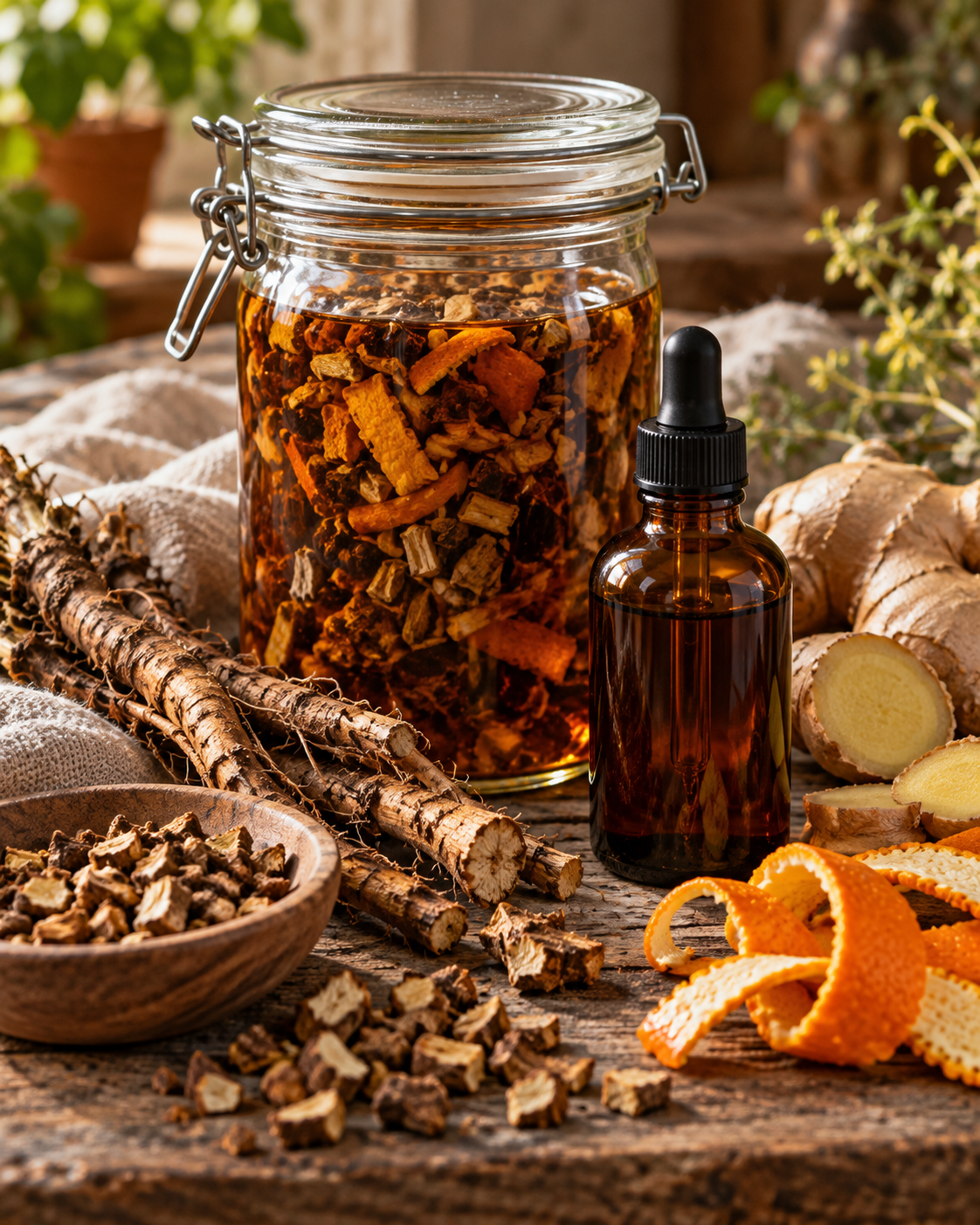
Dandelion, Ginger & Orange Bitters
Starting batch: 200 mL alcohol + 15 g dried herbs
8 g dried, chopped dandelion root (Taraxacum officinale)
4 g dried ginger root (Zingiber officinale)
3 g dried sweet orange peel (Citrus sinensis), without excess white pith
200 mL unflavoured 40% alcohol (80-proof vodka)
A clean glass jar with a tight-fitting lid
Preparation
Combine the dried dandelion root, ginger, and orange peel in a clean glass jar. Pour in the vodka, ensuring all the plant material is submerged. Stir gently to release trapped air bubbles, then seal the jar.
Store in a cool, dark place for approximately 3–4 weeks, shaking gently every few days. Check periodically that the herbs remain covered by the alcohol.
Strain through a fine mesh strainer or cheesecloth, pressing the herbs to recover the liquid. Transfer the finished bitters into clean amber glass bottles and label with the ingredients, alcohol strength, and preparation date.
Tip: Taste a small, diluted sample after two weeks to assess the balance of bitterness, warmth, and citrus. Allow the blend to steep longer if a stronger flavour is desired.
BALANCING YOUR HERBAL BLEND
Creating a Balanced Digestive Bitters Formula
A well-crafted digestive bitters formula brings together different flavours and plant qualities. Intensely bitter herbs provide the foundation, while aromatic ingredients add warmth, freshness, and complexity. The proportions you choose influence the finished preparation, allowing you to create anything from a strongly bitter traditional extract to a gentler, more aromatic blend. Understanding how these ingredients work together is the key to developing your own formulas.
FINDING THE RIGHT BALANCE
Taste a small, diluted sample after approximately two weeks of steeping. If the bitterness is too pronounced, consider adjusting the proportions in your next batch rather than simply adding more herbs to the existing preparation. Keep a record of each ingredient’s weight, the alcohol strength, and the steeping time so you can refine your formula with each batch.
AFTER THE EXTRACTION
Straining, Bottling & Storing Digestive Bitters
Once your herbs have finished steeping, careful straining and proper storage help maintain the quality of your finished bitters. Clean equipment, suitable bottles, and clear labels make your preparations easier to preserve, identify, and use over time.
Straining Your Bitters
When the extraction period is complete, pour the mixture through a fine-mesh strainer or clean cheesecloth to separate the liquid from the herbs. Gently press the plant material to recover the remaining extract. For a clearer finished preparation, allow any fine sediment to settle before transferring the liquid into bottles.
Bottling & Labelling
Transfer your strained bitters into clean, dry glass bottles with secure closures. Amber glass helps protect the extract from light, while small dropper bottles make dispensing convenient. Label each bottle with the ingredients, alcohol percentage, and preparation date so you can easily identify and track your homemade blends.
Storage & Shelf Life
Store alcohol-based bitters tightly closed in a cool, dark location, away from heat and direct sunlight. Properly prepared extracts with adequate alcohol content can remain usable for years, although flavour and quality may gradually change. Shelf life depends on the ingredients and final alcohol concentration. Discard preparations showing unexpected changes or signs of contamination.
FROM THE HERBAL LIBRARY
Choosing Herbs for Digestive Bitters
Digestive bitters draw from a wide variety of plants, each contributing its own distinctive flavour and traditional herbal qualities. Some provide the deep bitterness that defines the preparation, while others add warmth, fragrance, or freshness. Explore a few familiar herbs used in bitters formulas and learn what each brings to the blend.
Dandelion Root
Dandelion root brings an earthy, distinctly bitter flavour to traditional digestive bitters. It is often used as a foundational ingredient because its bitterness is noticeable without being as intense as gentian. Dried, chopped root works particularly well in alcohol-based preparations and pairs beautifully with warming aromatics such as ginger and orange peel.
Ginger Root
Ginger brings warmth, spice, and a lively aromatic character to digestive bitters. Traditionally valued for digestive comfort, its pungent flavour complements earthy bitter roots and adds depth to herbal blends. Dried ginger root is particularly useful in alcohol-based preparations, where even a modest amount can contribute noticeable warmth.
Fennel Seed
Fennel seed contributes a naturally sweet, anise-like flavour that helps soften the intensity of bitter herbs. Traditionally used as a carminative for digestive comfort, fennel adds fragrance and balance to herbal formulas. Lightly crushing the dried seeds before extraction helps expose their aromatic constituents.
Peppermint Leaf
Peppermint adds a bright, cooling freshness to digestive bitters. Its aromatic leaves offer a pleasant contrast to earthy roots and warming spices, helping create a more rounded flavour. Traditionally used for digestive comfort, peppermint works particularly well in small amounts alongside dandelion, ginger, and other bitter ingredients.
CONTINUE EXPLORING
Keep Growing Your Herbal Knowledge
Digestive bitters are just one way to explore the art of herbal preparations. Continue building your skills with other traditional methods, from infused oils and salves to teas and infusions, or discover the individual plants behind your favourite herbal blends in our Herbs A–Z library.