
THE HERBAL LIBRARY · PREPARATIONS
Tea + Infusion
One of the simplest ways to work with herbs begins with water. Learn the difference between everyday herbal teas and longer infusions, how to prepare each method, and how to choose the right approach for your herbs.
UNDERSTANDING THE METHODS
Two Ways to Work with Water
Herbal teas and longer infusions share the same basic principle: water draws soluble compounds from plants. The amount of herb, water temperature, and steeping time influence what ends up in your cup.
THE EVERYDAY METHOD
Herbal Tea
A simple preparation made by steeping herbs in hot water, typically for 5–15 minutes. Ideal for aromatic leaves and flowers, and everyday enjoyment.
THE LONGER STEEP
Long Infusion
A preparation steeped for several hours, often with a larger quantity of herb. Used with suitable plant materials when a more concentrated water extraction is desired.
THE EVERYDAY METHOD
How to Make Herbal Tea
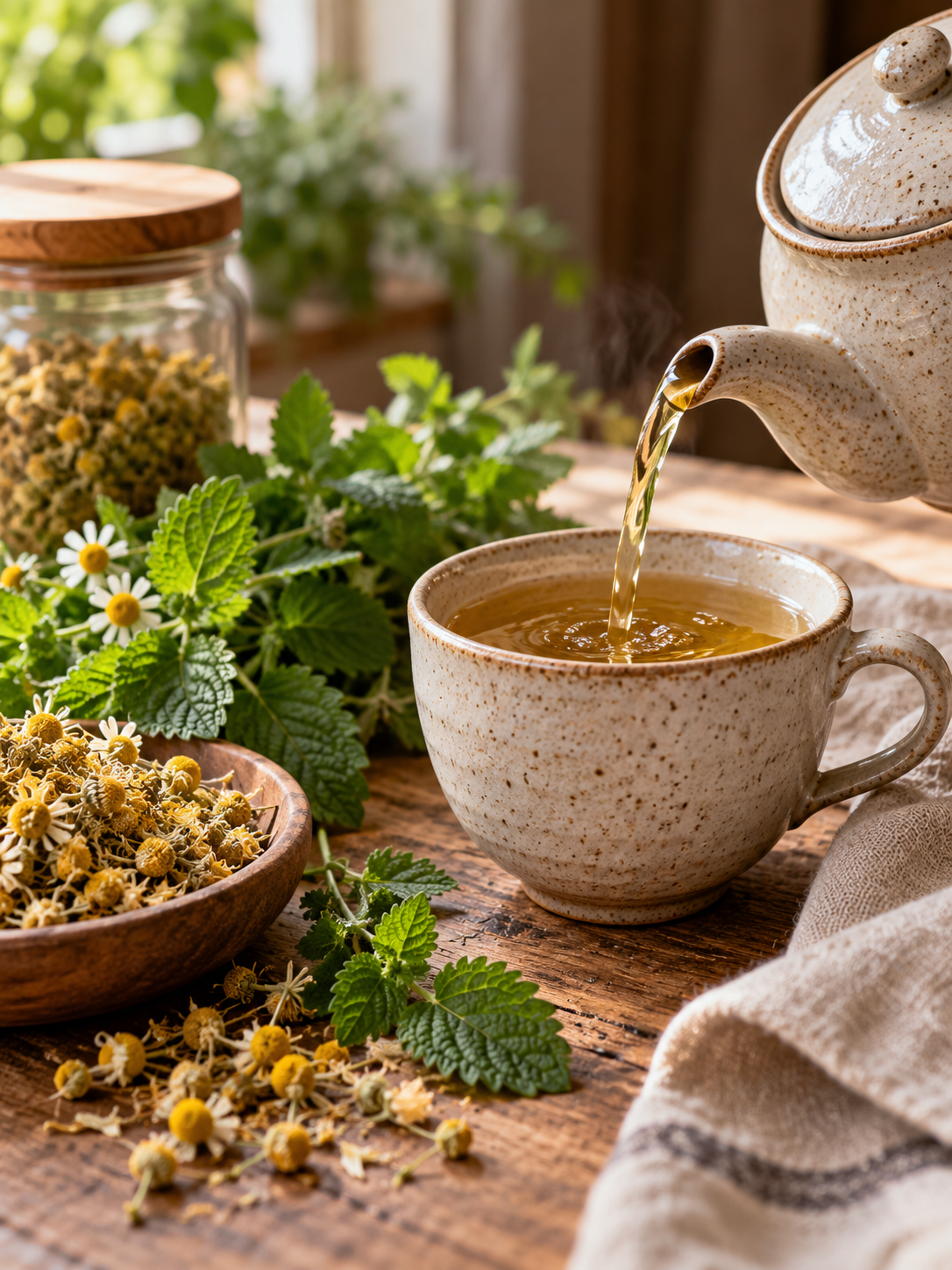
A good herbal tea begins with the right amount of herb, freshly heated water, and enough time to steep. This simple method works especially well for aromatic leaves and flowers, such as lemon balm, peppermint, and chamomile.
A SIMPLE HERBAL TEA
The Basic Method
For one cup (250 mL)
1–2 teaspoons dried aromatic leaves or flowers, or 2–4 teaspoons fresh, loosely packed herbs.
250 mL freshly heated water.
Preparation
Place the herbs in a teapot or heatproof mug. Pour hot water over them, cover, and steep for 5–15 minutes. Strain and enjoy.
Tip: Keep your tea covered while steeping to help retain its aromatic compounds.
THE LONGER STEEP
How to Make a Long Infusion
A long infusion allows suitable herbs to remain in water for several hours, creating a more concentrated preparation than an everyday tea. This method is often used with nourishing leafy herbs, such as nettle, when a longer extraction is desired.
THE BASIC METHOD
A Nettle Leaf Infusion
For approximately 1 litre
15–25 g dried nettle leaves
1 litre freshly boiled water
Preparation
Place the dried nettle leaves in a large heatproof jar or teapot. Pour the freshly boiled water over the leaves, cover, and steep for approximately 4 hours. Strain, refrigerate promptly, and use within 24 hours.
Choosing Herbs for Long Infusions
Long infusions are commonly prepared with suitable leafy herbs, such as nettle. Delicate aromatic herbs, including peppermint and lemon balm, are generally better suited to shorter, covered steeps to preserve their fragrance. Roots, bark, and seeds may require different preparation methods altogether.
KEEPING YOUR PREPARATIONS FRESH
Storage & Practical Considerations
Water-based herbal preparations are best enjoyed fresh. A few simple habits can help preserve their quality, from using clean equipment to cooling and refrigerating any tea or infusion you plan to save for later.
Use Clean Equipment
Start with clean mugs, strainers, jars, and utensils. Use a clean, covered container for anything you plan to store.
Refrigerate Promptly
Enjoy tea fresh whenever possible. Cool leftovers promptly and refrigerate in a covered container rather than leaving them at room temperature.
Use Within 24 Hours
For homemade water-based herbal preparations, a practical approach is to refrigerate and use within 24 hours. Discard anything with an unusual smell or appearance.
FROM THE HERBAL LIBRARY
Choosing Herbs for Tea & Infusions
Different herbs bring different qualities to a cup of tea. Some are prized for their delicate fragrance, while others are traditionally prepared as longer infusions. Getting to know each plant helps you choose a preparation that suits its character.
Lemon Balm
A fragrant, lemony herb traditionally enjoyed as a calming tea. Best prepared with a shorter, covered steep.
Peppermint
Cooling, aromatic leaves that make a refreshing tea, particularly when steeped covered to retain their fragrance.
Chamomile
Delicate flowers with a gentle, apple-like aroma, commonly prepared as an everyday herbal tea.
Nettle
An earthy, mineral-rich leafy herb traditionally used in both everyday teas and longer infusions.
CONTINUE EXPLORING
Keep Growing Your Herbal Knowledge
Learning to prepare herbal teas and infusions is just the beginning. Explore other preparation methods, or get to know the individual plants behind your favourite herbal remedies.