
THE HERBAL LIBRARY · PREPARATIONS
Poultice
A herbal poultice is a traditional topical preparation made by applying fresh, crushed, or softened plant material directly to the skin, usually held in place with a clean cloth or bandage. Unlike infused oils and salves, poultices use the plant material itself, allowing its natural moisture and constituents to remain in close contact with the area being treated.
Learn how to prepare fresh and dried herbal poultices, choose suitable plants, apply them comfortably, and understand when this traditional method is most useful.
UNDERSTANDING THE METHODS
Two Ways to Prepare a Herbal Poultice
Herbal poultices can be prepared using either fresh or dried plant material. The method depends on the herb, its texture, and the moisture needed to create a soft preparation that sits comfortably against the skin. Both approaches have long been used in traditional herbal practice.
THE FRESH HERB METHOD
Fresh Herb Poultice
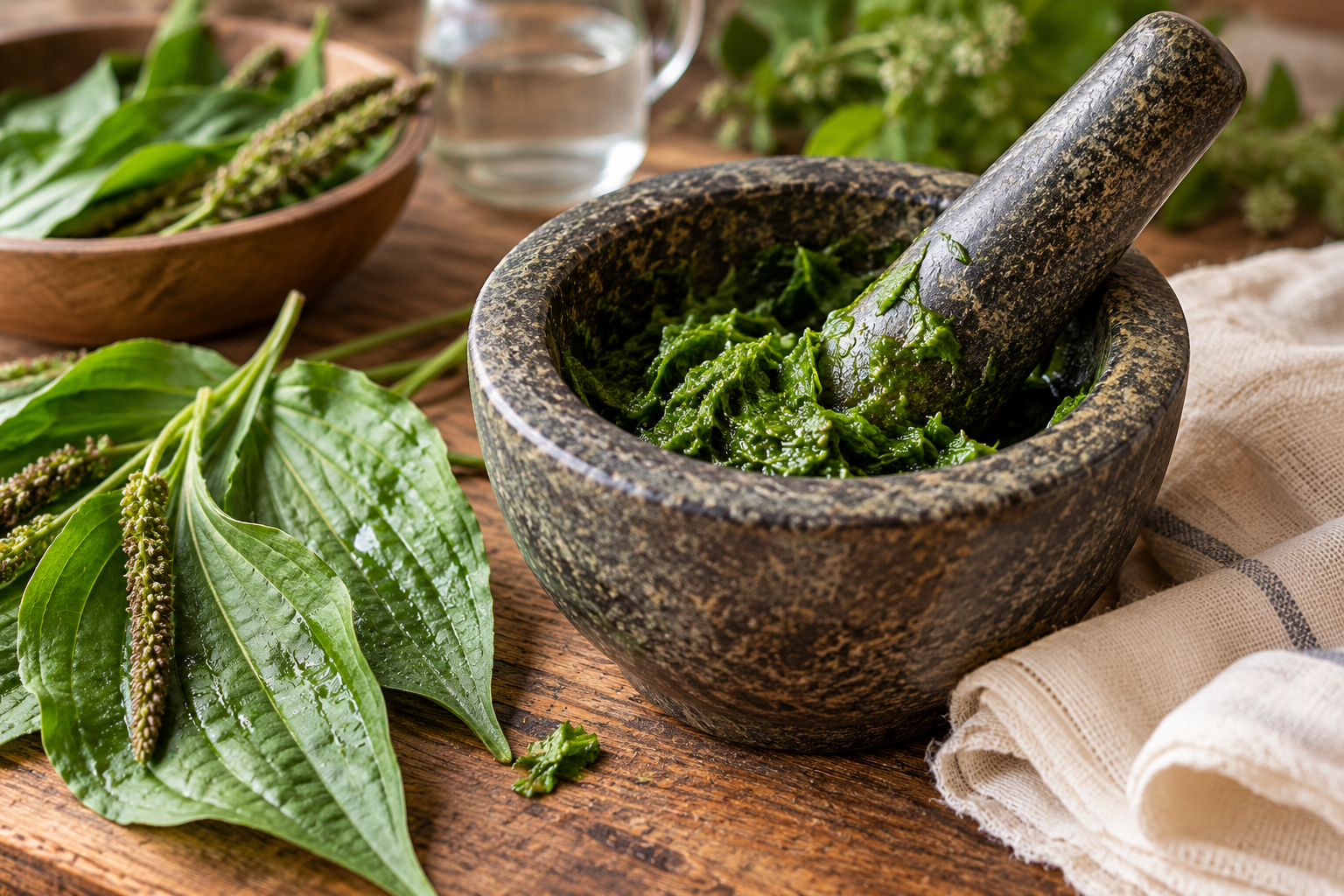
Fresh leaves are washed, then bruised, crushed, or finely chopped to release their natural moisture. The softened plant material is applied to clean, intact skin and held in place with a clean cloth. This method works particularly well with tender, moisture-rich herbs such as plantain and chickweed.
THE REHYDRATED METHOD
Rehydrated Herb Poultice
Dried herbs are finely crumbled or powdered, then mixed with a little warm water until they form a soft, spreadable paste. The preparation can be placed on clean cloth or gauze before being applied to the skin. This method makes it possible to prepare poultices using herbs preserved from an earlier harvest.
THE BASIC METHOD
How to Make a Herbal Poultice
A fresh herbal poultice is made by crushing or bruising clean plant material to release its moisture and juices, then applying it directly to the skin. This traditional method is particularly useful with soft, leafy herbs that can be easily mashed into a moist preparation.
A TRADITIONAL POULTICE
Fresh Plantain Leaf Poultice
Ingredients
4–6 fresh, clean broadleaf plantain leaves (Plantago major)
A few drops of clean water, if needed
Clean gauze or a soft cotton cloth
Preparation
Gather healthy plantain leaves from an area free of pesticides and roadside contamination.
Wash the leaves thoroughly and pat them dry.
Bruise or crush the leaves using a clean mortar and pestle until they become soft and moist.
Add a few drops of water if necessary to help form a workable preparation.
Place the crushed leaves directly onto clean, intact skin, or spread them onto clean gauze.
Cover loosely with a clean cloth and leave in place for approximately 15–20 minutes.
Remove the poultice, gently rinse the skin, and discard the used herbs.
Makes: One small poultice for immediate use.
Tip: Fresh plantain leaves are traditionally used in topical herbal preparations. Always identify the plant correctly, and avoid applying homemade poultices to deep wounds, infected skin, or serious burns.
THE REHYDRATED METHOD
How to Make a Poultice with Dried Herbs
Fresh plants aren’t always available, especially outside the growing season. Fortunately, many dried herbs can be rehydrated with warm water to create a soft, moist poultice. This method is particularly useful for dried flowers and leaves, allowing you to prepare a traditional topical application using herbs stored in your home apothecary.
THE BASIC METHOD
A Dried Calendula Flower Poultice
For one small application
2 tablespoons dried calendula flowers
2–3 tablespoons warm water, or enough to moisten
Clean gauze or a soft cotton cloth
Preparation
Place the dried calendula flowers in a small clean bowl. Add warm water gradually, stirring until the flowers soften and form a moist, workable mixture. Allow them to rehydrate for approximately 5–10 minutes, adding a little more water if necessary.
Spread the softened flowers onto clean gauze or cloth, fold it into a small compress, and apply to clean, unbroken skin for approximately 10–15 minutes. Remove and gently rinse the area if needed. Use a freshly prepared poultice each time.
Choosing Herbs for Rehydrated Poultices
Dried calendula, chamomile, and plantain leaves are traditional choices for rehydrated poultices. Finely cut or crumbled herbs are generally easier to soften and shape than large, woody pieces. The finished mixture should be comfortably warm, moist enough to remain pliable, and never hot against the skin.
PRACTICAL CARE & HANDLING
Using Herbal Poultices Safely
Herbal poultices are intended for immediate external use. Because they contain fresh or rehydrated plant material, cleanliness, proper application, and careful handling are important. A few simple practices help keep your preparations fresh and comfortable against the skin.
Prepare Fresh Each Time
Make only the amount needed for one application. Use freshly gathered, thoroughly washed herbs or clean, properly stored dried herbs. Discard the plant material after use rather than saving or reusing it.
Keep Everything Clean
Wash your hands and use clean bowls, utensils, gauze, and cloths. Apply homemade poultices only to clean, intact skin. Avoid deep wounds, infected areas, and serious burns.
Apply & Remove Gently
Apply the poultice at a comfortable temperature, never hot. Keep it in place for the time recommended in the recipe, then remove and discard it. Stop using it if irritation or discomfort develops.
FROM THE HERBAL LIBRARY
Choosing Herbs for Poultices
Different plants bring different qualities to a herbal poultice. Some have soft, moisture-rich leaves that are easily crushed when fresh, while others can be dried and rehydrated for use throughout the year. Learning each herb’s traditional topical uses helps you choose the right plant for your preparation.
Plantain
Broadleaf plantain is traditionally valued for soothing minor skin irritations. Its fresh leaves can be crushed into a moist poultice and applied to clean, intact skin.
Chamomile
Chamomile flowers are traditionally used in calming skin preparations. Dried flowers can be moistened with warm water and wrapped in clean cloth for external application.
Calendula
Calendula flowers have a long history in traditional skin care. Fresh or dried flowers can be softened and prepared as a gentle topical poultice.
Comfrey
Comfrey leaves have a long history in traditional external preparations, particularly for bruises and minor strains. Use only on intact skin, and avoid prolonged or repeated application.
CONTINUE EXPLORING
Keep Growing Your Herbal Knowledge
Poultices are one of the simplest ways to work with herbs externally, using fresh or dried plants in traditional skin preparations. Continue exploring other methods, from infused oils and herbal salves to teas and tinctures, or discover the individual plants and their traditional uses in our Herbs A–Z library.