
THE HERBAL LIBRARY · PREPARATIONS
Herbal Salve
Herbal salves transform infused oils into convenient, easy-to-apply preparations for everyday skin care. Made by combining herbal infused oil with beeswax, these simple balms can be customized with different herbs and textures. Learn how to make your own salve, adjust its consistency, and store it for use at home.
UNDERSTANDING THE INGREDIENTS
Two Essentials of a Herbal Salve
Herbal salves begin with a simple combination of infused oil and wax. The oil carries the herbal infusion and helps soften the skin, while the wax gives the preparation its structure and creates a protective layer. Understanding how these ingredients work together makes it easier to customize the finished salve.
THE HERBAL FOUNDATION
Herbal Infused Oil
A well-strained herbal infused oil forms the base of your salve. Calendula, plantain, and lavender are popular choices for traditional skin-care preparations, each bringing its own qualities to the finished blend.
THE STRUCTURING INGREDIENT
Beeswax
Beeswax transforms liquid herbal oil into a soft, spreadable salve. The amount used determines its firmness: less wax creates a softer balm, while more wax produces a firmer preparation.
THE BASIC METHOD
How to Make a Simple Herbal Salve
Making a herbal salve is a straightforward way to transform your homemade infused oils into a useful, everyday skin-care preparation. With just two ingredients and gentle heat, you can create a smooth, spreadable balm that’s easy to apply and convenient to keep on hand.
A SIMPLE HERBAL SALVE
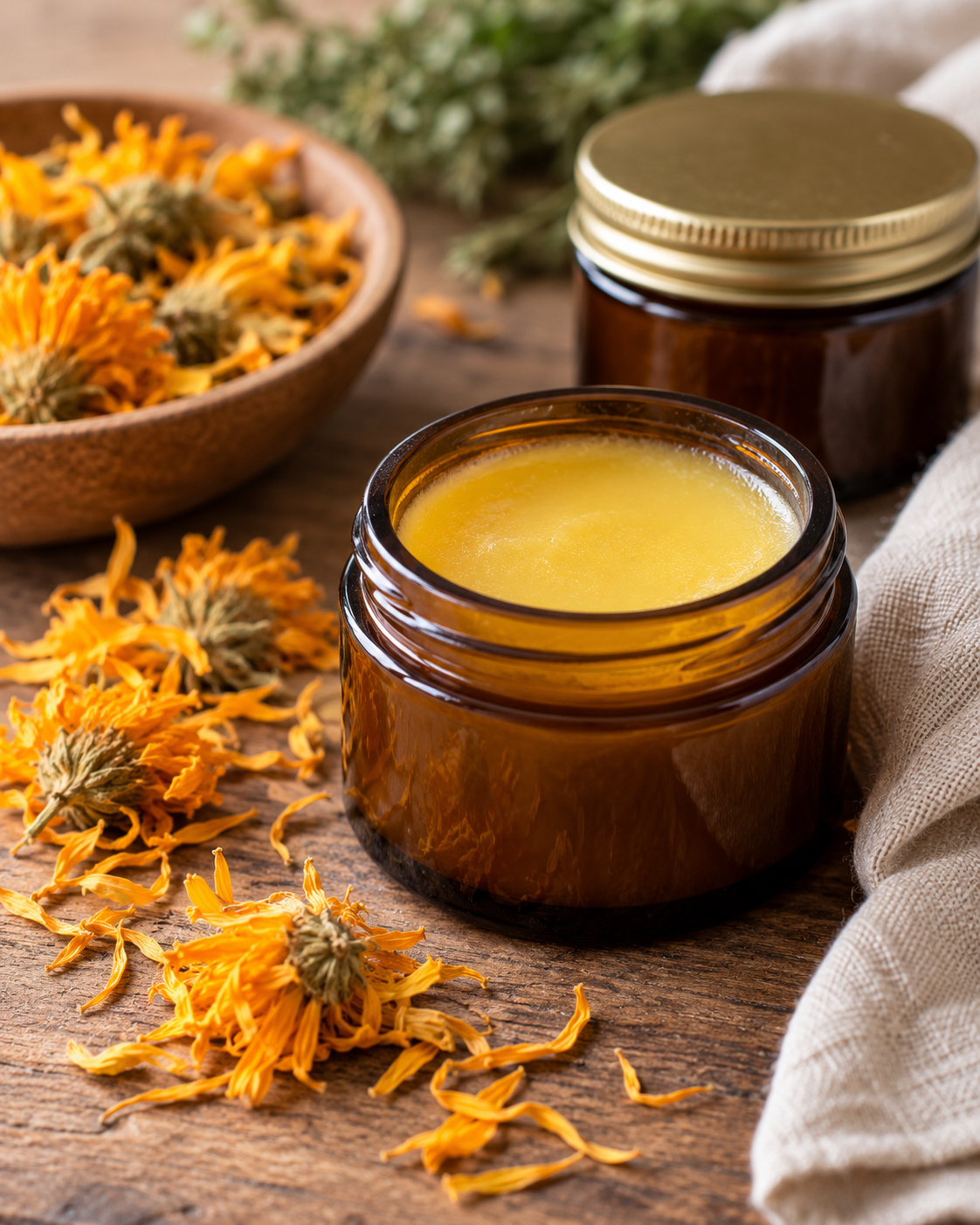
Calendula Salve
Makes approximately 140 mL
½ cup (120 mL) calendula-infused olive oil
15 g beeswax pellets (approximately 2 tablespoons)
Preparation
Add the calendula-infused oil and beeswax to a heatproof container set over a gently simmering water bath. Stir occasionally until the beeswax has completely melted, keeping water out of the mixture.
Remove from the heat and carefully pour into clean, completely dry tins or glass jars. Allow to cool undisturbed until firm, then cover and label with the ingredients and preparation date.
Tip: To test the consistency, place a few drops of the melted mixture on a chilled spoon. If it’s too firm, add a little more infused oil; if too soft, melt again with a small amount of additional beeswax.
MAKING IT YOUR OWN
Customizing Your Herbal Salve
Once you’ve mastered a basic herbal salve, you can begin adjusting its texture and ingredients to suit different purposes. Small changes to the amount of beeswax, the choice of infused oil, or the combination of herbs can transform a simple recipe into a softer everyday balm or a firmer, more protective preparation.
FINDING THE RIGHT CONSISTENCY
Adjusting the Oil-to-Beeswax Ratio
For ½ cup (120 mL) of herbal infused oil
Soft Salve — Approximately 10 g Beeswax
A softer, more spreadable consistency suited to everyday body care and massage. Ideal when you prefer a balm that melts easily against the skin.
Medium Salve — Approximately 15 g Beeswax
A balanced, all-purpose consistency that holds its shape while remaining easy to apply. A practical starting point for homemade herbal salves.
Firm Salve — Approximately 20 g Beeswax
A denser, more protective balm that stays solid in warmer conditions. Useful for small tins, travel containers, and preparations intended for targeted application.
Choosing Your Herbal Oils
Calendula-infused oil makes a lovely base for everyday skin care, while plantain-infused oil is traditionally used in soothing topical preparations. Lavender-infused oil adds a gentle botanical aroma. You can use a single infused oil or combine compatible oils to create your own blend.
Tip: These ratios are starting points. Beeswax hardness, carrier oils, and room temperature can affect the finished texture. Test a few drops on a chilled spoon before pouring your salve into containers.
CARING FOR YOUR FINISHED SALVE
Storage & Practical Considerations
A homemade herbal salve can remain useful for months when prepared with good-quality ingredients and stored carefully. Because salves contain oils and waxes rather than water, they generally do not require the same preservation system as water-based creams. Clean, dry containers, careful handling, and protection from heat and light help maintain their quality.
Keep It Clean & Dry
Use clean, completely dry containers and utensils when making your salve. Apply with clean, dry fingers or a small spatula, and avoid introducing water into the finished preparation.
Protect from Heat & Light
Store tightly closed in a cool, dark place, away from direct sunlight and excessive heat. Warm temperatures can soften or melt a salve, while repeated heating and cooling may change its texture.
Know When to Replace It
Shelf life depends on the infused oil and storage conditions. Label each batch, use it within the oil’s remaining shelf life, and discard any salve that develops an unusual odour, visible mould, or signs of contamination.
EXPLORING HERBAL INGREDIENTS
Choosing Herbs for Herbal Salves
Different herbs bring their own traditional qualities to homemade salves, making it easy to create preparations for a variety of skin-care purposes. From gentle calendula to aromatic lavender, choosing suitable plants and preparing them as infused oils allows you to build simple, personalized herbal blends.
Calendula
Calendula is a favourite for gentle, everyday skin-care salves. Its golden flowers are traditionally infused into oils for soothing balms that help soften and condition dry skin.
Lavender
Lavender brings a soft botanical fragrance to homemade salves. Its infused flowers are well suited to aromatic body balms, hand salves, and relaxing massage preparations.
Plantain
Plantain is a traditional addition to herbal first-aid salves. Its leaves are often infused into oil for preparations used to comfort minor skin irritations and insect bites.
Yarrow
Yarrow has a long history in traditional herbal skin care. Its flowers and leaves can be infused into oil and incorporated into salves intended for occasional topical use.
CONTINUE EXPLORING
Keep Growing Your Herbal Knowledge
Making your own herbal salves is a rewarding way to put your infused oils to use. Continue exploring traditional herbal preparations, discover new plants for your homemade blends, and develop practical skills you can return to season after season.