
HERBAL LIVING · FROM THE JOURNAL
A Simple Home Herbal Apothecary: Where to Begin
A home herbal apothecary doesn’t begin with shelves full of bottles or an impressive collection of dried plants. It begins with a handful of herbs you know well, a few simple preparations, and the curiosity to learn through practice.
Whether you’re growing herbs in your garden, drying a small harvest, or purchasing your first botanical ingredients, creating an apothecary is about building a useful collection that fits your everyday life. You don’t need to make everything at once. A thoughtful beginning, with room to grow, is more valuable than a cupboard filled with ingredients you rarely use.
Start With a Few Versatile Herbs
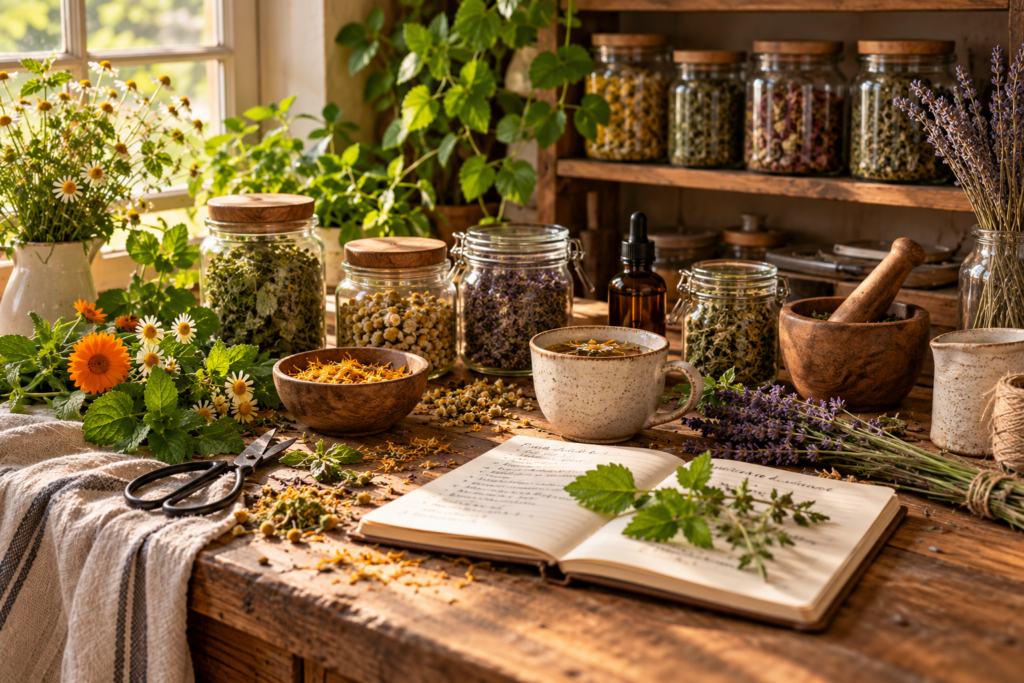
The most useful herbal apothecaries are built around plants you understand and enjoy working with. Instead of collecting dozens of herbs, begin with three to five that suit your interests, growing conditions, and the preparations you want to make.
Calendula is a lovely starting point for learning about infused oils and skin preparations. Chamomile and lemon balm are familiar herbs for comforting teas, while peppermint offers a refreshing introduction to aromatic infusions. Plantain, often found growing close to home, is another useful plant to become familiar with.
Spend time learning how each herb looks, smells, grows, and is traditionally prepared. Understanding a small collection deeply gives you a much stronger foundation than simply owning a large one.
Choose Preparations You’ll Actually Use
A home apothecary becomes useful when the herbs you collect turn into preparations that fit naturally into your routines. Rather than trying to master every method at once, begin with one or two that you’re likely to make regularly.
Herbal teas and infusions are an accessible place to begin. They require little more than dried or fresh herbs, hot water, and a covered vessel for steeping. As your confidence grows, you might explore infused oils for topical preparations, salves made from those oils, or tinctures that allow you to keep certain herbal preparations on hand.
Each method offers a different way to work with plants. Learning why you would choose one preparation over another is just as valuable as following the steps to make it.
Keep Your Tools and Storage Simple
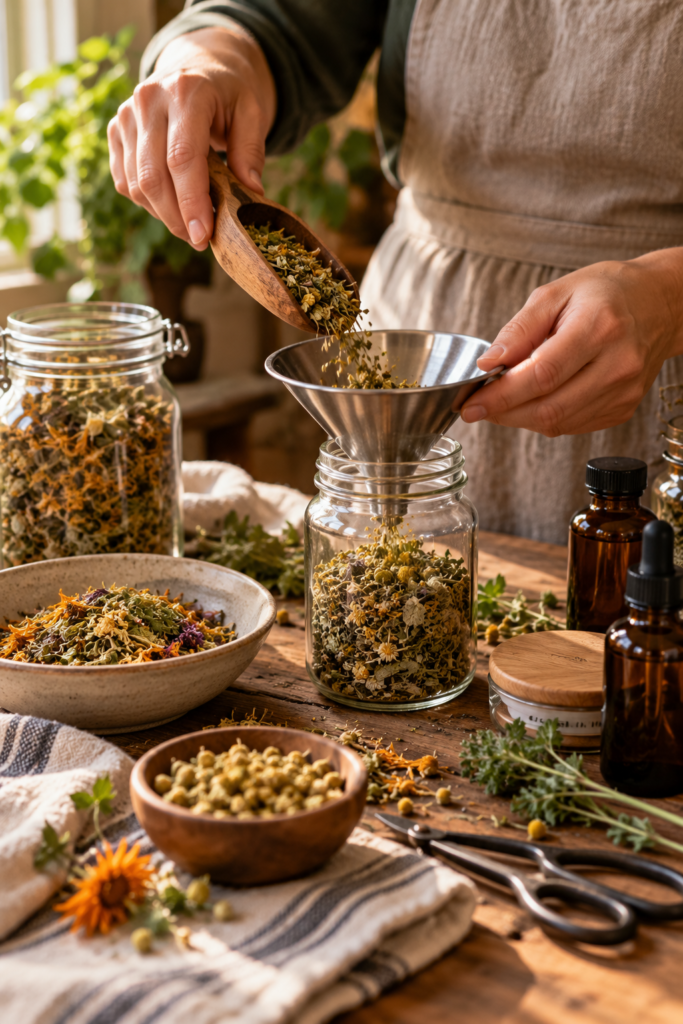
You don’t need specialized equipment to begin. Clean glass jars, a fine-mesh strainer, measuring spoons, a funnel, and a few bottles or tins will cover many basic herbal preparations. Start with what you already own, then add tools as your needs become clearer.
Store dried herbs in clean, airtight containers away from direct sunlight, excess heat, and moisture. Label each jar with the herb’s name, the plant part, and the date it was harvested or purchased. Finished preparations should also be clearly labelled with their ingredients and preparation date.
A small, organized shelf is often more useful than a large collection you struggle to keep track of. When everything has a place, it’s easier to see what you have, what needs replenishing, and which herbs you reach for most often.
Build Your Apothecary Gradually
An herbal apothecary is something you build over time, not something you need to complete in a weekend. Begin with a few herbs and preparations, use them, and pay attention to what becomes part of your everyday life.
Keep a simple notebook of the herbs you work with, the preparations you make, and what you notice along the way. Record quantities, dates, methods, and any changes you would make next time. These small observations become your own practical reference, shaped by experience rather than guesswork.
As the seasons change, your apothecary can change with them. You might dry calendula from your summer garden, prepare warming teas in autumn, or make a fresh batch of herbal oil when your supplies run low. Over time, your collection becomes a reflection of the plants, skills, and traditions that matter most to you.
An herbal apothecary isn’t measured by the number of jars on a shelf. It’s built through the quiet practice of learning your plants, preparing them thoughtfully, and returning to those skills season after season. Start simply, stay curious, and let your knowledge grow alongside your collection.
Take Your Herbal Skills Further
THE ROOTED TRAVELER GUIDE COLLECTION
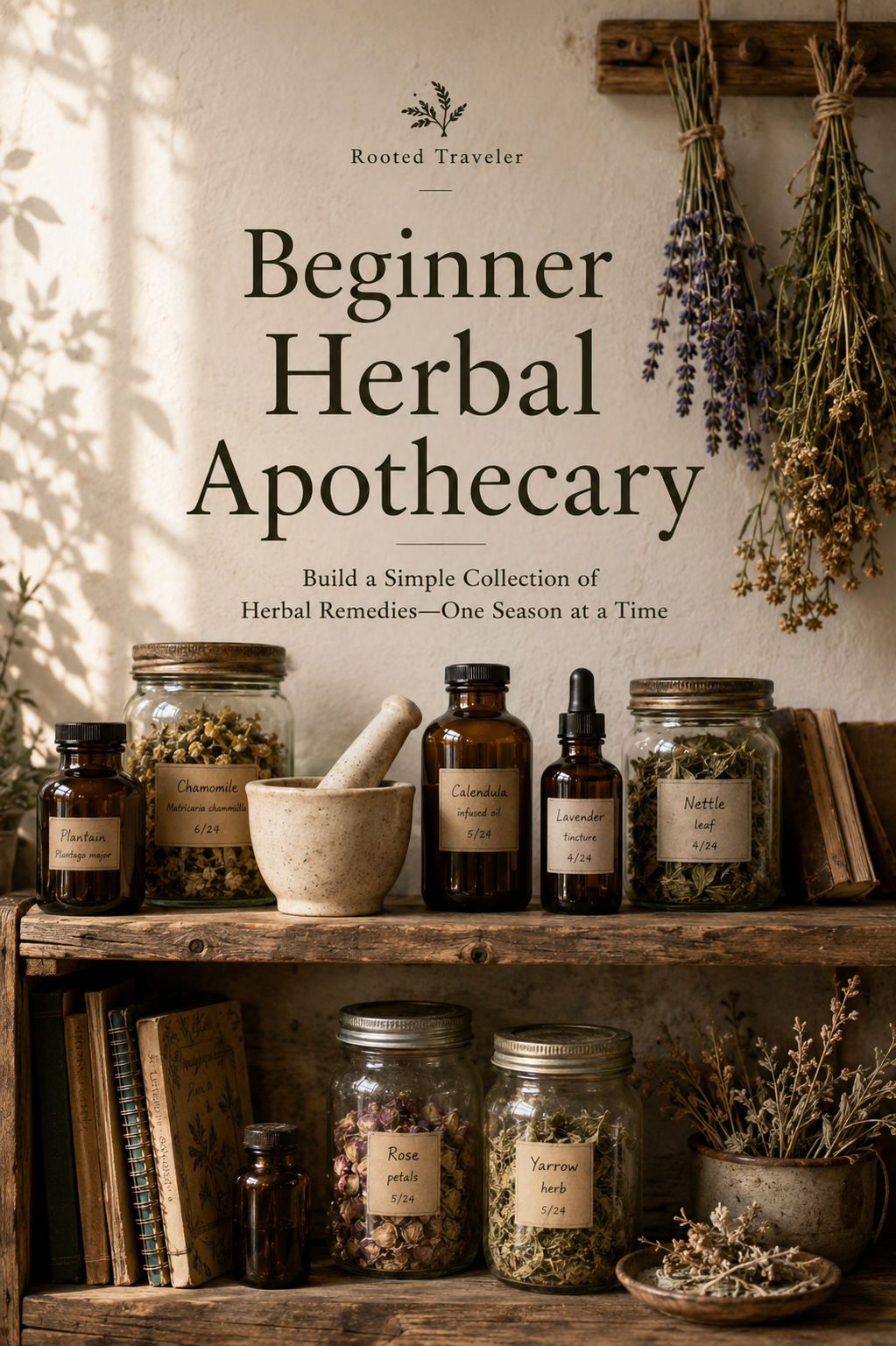
Beginner Herbal Apothecary
Ready to build your own herbal apothecary? Our Beginner Herbal Apothecary printable guide helps you take the next steps, from choosing useful herbs and understanding basic preparations to organizing a collection that grows with your experience.
Printable PDF · 18 pages